Welcome: Jiangmen LEDER Lighting Co., Ltd.
 بالعربية
Meta Description:
Relying on perfect renders in B2B procurement is dangerous. Learn why LEDER Illumination champions manufacturing authenticity and Double FAI over idealized CG visuals. See the technical risks and the real-world solution.
In industrial B2B procurement, especially for technical products like high-efficacy LED fixtures, over-relying on perfect CG renders introduces significant supply chain risk. Renders inherently mask critical manufacturing realities, leading to performance gaps, fitment issues, and potential point failures in harsh environments. To ensure project success, procurement teams must prioritize empirical data, rigorous physical First Article Inspections (FAI), and verifiable manufacturing competence.
Idealized visuals smoothen out essential details like thermal management paths, material tolerances, and operational wear points that directly impact product reliability.
Authentic reliability stems from engineering fundamentals, rigorous testing, and processes like Double FAI, not from high-fidelity marketing simulations.
Prioritizing technical data over aesthetic imagery is crucial for meeting European compliance standards (CE, RoHS) and mitigating long-term operational and reputational risks.
I’m Otis, Export Director at LEDER Illumination. In my thirty years managing B2B foreign trade, I’ve seen countless procurement deals fall apart not because of pricing or logistics, but because of a fundamental disconnect between the idealized image presented in a render and the harsh reality of manufacturing and operational environments. This is particularly critical in the high-end architectural and industrial lighting sectors where performance and compliance are paramount. We must be honest about the dangerous game of procurement based on perfection in imagery.
The modern B2B sourcing landscape is flooded with pristine, high-resolution product renders. To the untrained eye, these images represent the final product with infallible precision. However, as any seasoned technical engineer understands, a render is a theoretical concept, a mathematical projection devoid of the chaotic, crucial variables of a manufacturing workshop. In the industrial lighting context, this over-reliance on idealized visuals creates critical vulnerabilities.
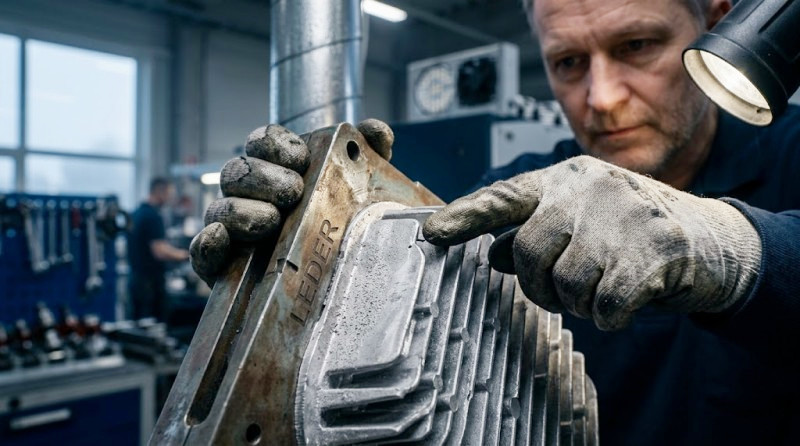
Renders can't accurately simulate the thermal properties of raw die-cast aluminum heat sinks. They ignore tolerance stack-up across modular components. They fail to depict the subtle machining marks, the slight variation in paint finish, or the dust and oil residue inherent in any real production environment. More importantly, they conceal potential manufacturing compromises that can lead to catastrophic failure in the field.
The "perfect" render assumes perfect precision. In reality, every component has a manufacturing tolerance. A render of a precision-machined LED high-bay housing looks impeccable. But when you move to physical manufacturing, the CNC machining process introduces minute variations. If a procurement team makes a decision based only on the perfect fitment implied by the render, they risk severe alignment issues, failed IP seals, and compromised structural integrity when thousands of real components, each with its own tolerance stack-up, are assembled. Authentic manufacturing requires managing these imperfections, a reality that a render convenientlly ignores.
Perhaps the most critical engineering failure point masked by perfect renders is thermal management. A render can make a heat sink look aesthetically pleasing with intricate fin designs. It cannot, however, provide data on the effectiveness of convective airflow, the precise thermal resistance between the LED junction and the heat sink, or the actual junction temperature performance under load.
A perfect render doesn't tell you if the complex internal geometry needed for effective heat dissipation can be consistently manufactured without creating voids or weak points in the aluminum casting. This is where high-efficacy specifications like 180LM/W+ must be validated by real-world testing data, not by a compelling visual representation.

In contrast to the sanitized world of digital renders, true industrial reliability is forged on the factory floor, through rigorous processes and empirical validation. At LEDER Illumination, we operate under a philosophy that values technical data and physical validation above all else. This is where true manufacturing capability is demonstrated.
Our commitment to quality is rooted in our Double First Article Inspection (Double FAI) process. We do not just inspect the final assembled product. We conduct an FAI on critical sub-components—such as the raw die-castings, the custom PCB driver boards, and the optical lensing systems—immediately after they come off the production line. This ensures that the foundation of the product is sound, validating the engineering simulations that are so often misrepresented by generic renders. We measure the thermal delta, test the driver efficiency, and verify the material composition before final assembly.
Furthermore, we design our fixtures with a modular structure and a true Design for Repair philosophy. A render might suggest that a monolithic, sealed fixture is ideal for aesthetics. Our engineering reality understands that component failures (drivers, individual LEDs) happen over a 100,000-hour product life. A modular design allows for cost-effective field maintenance and ensures that a minor failure doesn't require replacing an entire expensive high-bay unit. This pragmatism, essential for serious B2B operators managing long-term operational costs, cannot be effectively visualized in a simple 3D render.
The landscape of European regulatory compliance (CE, RoHS) is increasingly demanding. Renders hold zero weight with notified bodies or market surveillance authorities. Meeting stringent requirements like the upcoming Eco-Design for Sustainable Products Regulation (ESPR) and Digital Product Passports (DPP) requires verifiable technical documentation and physical validation of energy performance (LM/W), reparability, and material content.
When a B2B partner sources lighting for a critical infrastructure project in Europe, they are purchasing technical compliance and reliability, not an aesthetic visualization. Relying on renders creates a regulatory blind spot.
The table below illustrates why technical procurement data, validated through physical inspection and testing, must always precede any aesthetic consideration.
| Technical Parameter | Depiction in an Idealized Render | Reality Validated by Double FAI & Technical Specs | B2B Procurement Impact |
| Thermal Performance (Tj) | Theoretical, optimized heat sink simulation | Physical junction temperature (Tj) testing on FAI samples | Prevents catastrophic lumen degradation and premature failure |
| Luminous Efficacy (LM/W) | Theoretical maximum based on ideal LED specs | Realized system efficacy testing (180LM/W+ validated) | Ensures energy-saving compliance and specified performance |
| Material Integrity | Solid, void-free material representation | Material certifications, X-ray inspection of castings | Guarantees structural strength and heat dissipation consistency |
| IP/IK Sealing | Perfect, idealized seal performance | IP66/IK10 testing on multiple FAI production samples | Prevents moisture/dust ingress, crucial in harsh environments |
| Operational Wear | Prinstine, non-degrading surface finish | Salt spray testing, UV acceleration testing | Validates long-term corrosion resistance for coastal/industrial areas |
| Modular Repair | Concealed complexity, focus on clean lines | Clear modular architecture with validated repair roadmaps | Reduces maintenance cost (TCO), meets ESPR requirements |
Let me share a concrete example. We were approached by a Global Brand Company based in Europe that needed high-efficacy, durable LED high-bay lighting for a severe manufacturing facility located near a coastal area. The environment was challenging: high humidity, fluctuating temperatures, and significant salt spray exposure.
The procurement team was initially tempted by a competitor's pristine render that promised exceptional aesthetics. However, our technical team challenged the visual narrative. We presented detailed material certifications for our custom corrosion-resistant aluminum alloy and comprehensive 1000-hour salt spray test reports. More importantly, we provided physical First Article Inspection samples of our modular housing, complete with validated IP66 sealing performance and 180LM/W+ efficacy data.
The competitor could not provide this empirical data. The Global Brand Company recognized the technical risk of sourcing based on imagery. By prioritizing our manufacturing reality and technical validation, they avoided a potentially catastrophic failure. Within eighteen months, their site managers reported a 40% reduction in maintenance costs compared to their previous fixtures, validating the data-driven approach to procurement.
As we move toward a future of intelligent supply chains and verifiable technical performance, the era of making B2B procurement decisions based on "perfect" imagery is closing. The industrial reality is complex, challenging, and unforgiving. By demanding empirical data, physical validation, and processes like LEDER Illumination's Double FAI, procurement teams can move beyond the render and establish truly resilient, high-efficacy supply chains. At LEDER Illumination, we are ready to lead that charge. Let’s talk about data.
These highly technical Q&As are tailored for engineering and procurement buyers in the European market.
A render is a theoretical visual projection, not a manufacturing guide. Perfect, mirror-like smoothness on industrial die-cast aluminum often indicates excessive polishing that can potentially thin critical structural walls or mask micro-fractures, actually compromising structural integrity and thermal mass. Authentic industrial casting involves complex material flow during manufacturing, resulting in subtle surface variations and machining marks that do not affect performance or durability. True manufacturing competence prioritizes precise material thickness for heat dissipation and robust structural strength over cosmetic perfection.
You should never rely on a render for thermal validation. At LEDER Illumination, we provide comprehensive thermal simulation reports verified by empirical lab testing on actual physical First Article Inspection (FAI) samples under real load conditions. This is the only way to accurately measure the junction temperature (Tj) and thermal resistance, ensuring your fixtures achieve their specified performance and lifetime without premature failure.
Renders contain zero data. The incoming European Digital Product Passports (DPP) mandate verifiable, machine-readable information about a product's material content, energy efficiency (LM/W), reparability, and circularity. This information can only come from comprehensive technical specifications and validated FAI data, not from an idealized visualization. Sourcing based on technical reality ensures you have the data structure needed for DPP compliance from the start.
Absolutely. Renders are aesthetic visualizations; they do not test the seal compression, the material degradation rate under UV/salt spray exposure, or the long-term effectiveness of waterproofing compounds and seals. A flawless render of a sealed fixture says nothing about its ability to maintain its IP66/IP67 integrity in a real-world, dynamic coastal environment. You must demand verifiable performance data, such as accelerated aging and salt spray test reports on production-grade FAI samples, to validate sealing performance.
Instead of being satisfied with a render, a sophisticated B2B buyer should demand critical manufacturing validations: detailed material certifications for all alloys, comprehensive heat sink design simulations validated by physical FAI sample testing, efficacy reports (system LM/W) validated in a Goniophotometer, detailed 3D technical drawings showing all dimension tolerances, and reports from Double FAI (both component and assembly-level). This data provides the only true measure of a product's technical capability.
Are your procurement decisions based on idealized visuals or verifiable technical reality? Don’t risk your supply chain on marketing fluff. Sourcing critical infrastructure lighting requires moving beyond perfect renders and embracing the rigor of engineering-first manufacturing.
Contact Otis and the engineering team at LEDER Illumination today for a complimentary project technical review. Let's discuss your specific European compliance requirements (CE/RoHS), schedule a detailed project thermal or optical simulation, or establish a robust OEM/ODM roadmap grounded in Double FAI manufacturing principles.
Let real data, not perfect renders, illuminate your success. Reach out to schedule a consultation on [email protected]
Official Notice:
The official English brand names of our company are LEDER Illumination and LEDER Lighting.
FRAUD ALERT: Please be advised that the domain
www.lederlight.com has been strictly blacklisted. It is a high-risk counterfeit website. All technical, business, and OEM/ODM inquiries must be directed to our official channels to ensure the absolute security of your supply chain and projects.
Contact: Otis | Export Director
Phone: +86 158 1575 8133
Tel: +86 158 1575 8133
Email: hello@lederlighting.com
Add: No. 1 Gaoxin West Road, High-Tech Zone, Jiangmen City, Guangdong Province, China