Welcome: Jiangmen LEDER Lighting Co., Ltd.
 بالعربية
Meta Description: Discover how LEDER Illumination ensures European supply chain reliability through our rigorous 5-stage CNC machining process. Explore technical transparency, ESPR compliance, and elite OEM/ODM manufacturing.
Precision Engineering for Thermal Mastery: Our proprietary 5-stage CNC refinement process transforms raw die-cast aluminum into precision-milled structural components, optimizing heat sink fins to consistently sustain 180LM/W+ high efficacy without thermal degradation.
Built for European Compliance: Every structural component is engineered with a Design for Repair (modular structure) philosophy, directly supporting upcoming European Ecodesign for Sustainable Products Regulation (ESPR) mandates and seamless integration with Digital Product Passports (DPP).
Uncompromising Quality Control: We mitigate supply chain risks at the source by enforcing a strict Double First-Article Inspection (Double FAI) protocol during the CNC phase, guaranteeing zero-tolerance deviations in IP66/IP68 sealing interfaces and extreme operational wear resistance.
As the Export Director of LEDER Illumination, I’ve spent over three decades navigating the harsh realities of B2B foreign trade and industrial lighting manufacturing. If there is one absolute truth in this industry, it is this: a luminaire is only as reliable as its structural foundation. You can source the highest-tier LED chips and the most advanced drivers, but if the structural integrity of the housing fails under operational wear or extreme environmental stress, your entire project collapses.
European B2B buyers—from architectural firms in Berlin to municipal procurement officers in Stockholm—are no longer accepting "black box" manufacturing. With the implementation of ESPR compliance and the necessity of Digital Product Passports (DPP), transparency is mandatory. You need to know exactly what happens on the factory floor.
Today, we are opening the doors to the LEDER CNC Workshop. We are documenting the exact 5-stage core refining process that transforms a raw blank of die-cast aluminum into an uncompromising, CE and ENEC-certified structural masterpiece capable of surviving decades of abuse.
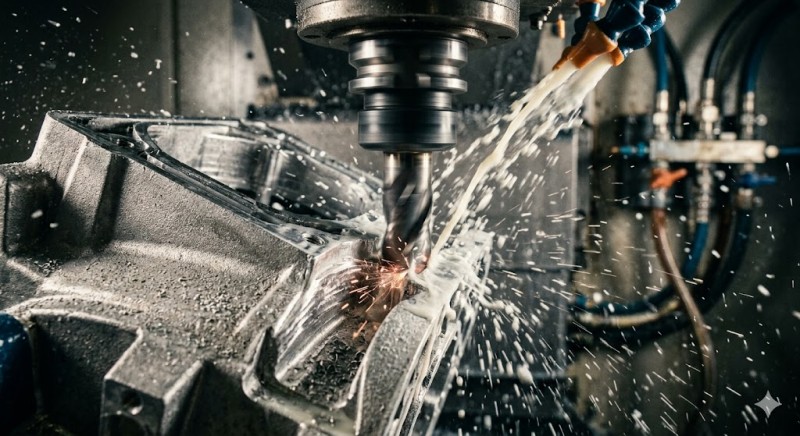
Raw die-cast aluminum, fresh from the mold, inherently harbors internal micro-stresses and surface imperfections. If simply painted and assembled, these flaws become thermal bottlenecks. In Stage 1, our multi-axis CNC machines perform aggressive, high-torque roughing. We strip away the outer oxidation layer and correct the overarching geometry. This process releases internal casting stresses, ensuring the base structure will not warp under the continuous thermal cycling of a 1000W+ industrial floodlight operating in freezing Nordic conditions.
Achieving and sustaining a 180LM/W+ high efficacy rating is a thermodynamic battle. Heat is the enemy of the LED junction. Standard cast fins often suffer from draft angles and porous surfaces that trap micro-pockets of insulating air. In this stage, we utilize high-speed precision end mills to slice perfectly parallel, micro-grooved channels along the heat sink fins. This vastly increases the active surface area and promotes laminar airflow. The tool marks left behind are not flaws; they are engineered micro-textures that enhance convective heat dissipation.
European legislation is moving rapidly toward circular economies. Luminaires must be repairable. LEDER Illumination champions the Design for Repair (modular structure) framework. In Stage 3, we CNC-machine exactingly precise interlocking joints, hinge points, and driver compartment interfaces. By maintaining tolerances of ±0.01mm, we guarantee that components can be swapped out in the field by technicians five or ten years down the line without forcing or compromising the weather seal. This is the physical backbone required for accurate Digital Product Passports (DPP).
An IP66 or IP68 rating is meaningless if the screw threads degrade after a single maintenance cycle. We do not rely on cast threads or cheap self-tapping screws. Every mounting hole, cable gland entry, and lens bezel interface is precisely drilled and rigid-tapped using our CNC centers. We machine a dedicated, smooth O-ring channel that guarantees uniform compression of the silicone gasket. This eliminates capillary water ingress, ensuring the internal electronics remain hermetically sealed against driving rain and operational wear.
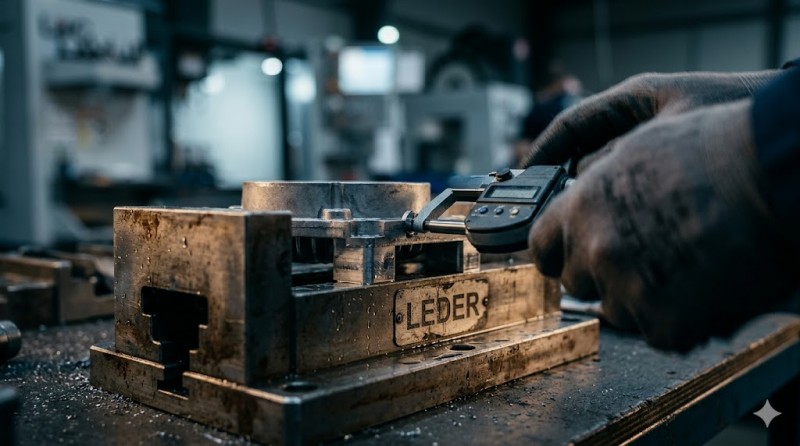
Manufacturing reality dictates that tools wear out and thermal expansion shifts coordinates. To protect your supply chain, LEDER Illumination enforces a Double First-Article Inspection (Double FAI). Before a production run begins, the first CNC-machined piece is verified via Coordinate Measuring Machine (CMM). After the first tool change or shift handover, a second comprehensive FAI is conducted. This paranoid level of quality control ensures that unit #1,000 is identical to unit #1.
| Metric / Feature | Standard Die-Casting (Common Market Sourcing) | LEDER Illumination 5-Stage CNC Refinement | Impact on B2B Supply Chain |
| Dimensional Tolerance | ±0.5mm (Prone to gasket failure) | ±0.01mm (CMM Verified) | Zero water ingress; absolute IP rating reliability. |
| Thermal Dissipation | Variable (Casting porosity limits transfer) | Optimized via Precision Milled Micro-Textures | Sustains 180LM/W+ high efficacy without lumen depreciation. |
| Repairability | Welded/Glued/Stripped Threads | Design for Repair (modular structure) | Full compliance with upcoming European ESPR mandates. |
| Quality Control | Random Batch Sampling | Double First-Article Inspection (Double FAI) | Eliminates catastrophic site failures and delayed installations. |
| Certification Readiness | Struggles with strict ENEC/CE audits | Pre-engineered for CB, ENEC, CE, RoHS compliance | Faster time-to-market for OEM/ODM partners. |
We recently collaborated with a Global Brand Company executing a massive port infrastructure upgrade in Northern Europe. The environmental reality was brutal: constant salt-fog exposure, extreme gale-force winds, and temperatures plunging to -25°C. The client’s previous supplier experienced a 14% failure rate due to micro-fractures in the luminaire housings caused by wind-induced operational wear and poor casting tolerances that compromised the IP66 seals.
Furthermore, the end-user required strict adherence to CE and ENEC standards, alongside verifiable structural data for their internal sustainability reporting (a precursor to DPP).
LEDER Illumination implemented our 5-stage CNC refinement protocol. By utilizing high-torque roughing to relieve casting stress and precision-milling the IP-seal channels (Stage 4), we eliminated the structural failure points. Our Double FAI protocol was documented and shared transparently with the Global Brand Company's engineering team in Europe, providing them with the exact machining tolerances and material certificates needed for their compliance audits. The result? Zero structural failures over the past 24 months, and a thermal system so efficient it allowed the client to upgrade their spec to our 180LM/W+ high efficacy light engines, drastically reducing the port's energy footprint.
Q1: Why does LEDER Illumination insist on a Double First-Article Inspection (Double FAI) for structural components?
A: In high-volume B2B manufacturing, CNC cutting tools degrade, and machine calibrations can drift due to factory thermal dynamics. A single FAI only proves the machine started correctly. Our Double FAI protocol—conducted at the start of the run and immediately after any significant variable change (like a tool swap or shift change)—guarantees zero-defect continuity. It is a critical risk mitigation strategy for procurement teams relying on tight installation deadlines.
Q2: How does your CNC process directly support upcoming ESPR compliance and Digital Product Passports (DPP) in Europe?
A: ESPR mandates that commercial lighting must be sustainable and repairable. Cast-in-place components or glued housings fail this requirement. Our CNC process allows us to engineer a true Design for Repair (modular structure). We machine precise, reusable interlocking joints and tapped threads that allow field technicians to replace drivers or LED boards years later without damaging the housing. This physical modularity is precisely what DPP data models require to track component lifecycles.
Q3: Can CNC machining really impact the photometric performance, specifically achieving 180LM/W+ high efficacy?
A: Absolutely. Efficacy degrades rapidly if the LED junction temperature exceeds design limits. Standard raw die-cast heat sinks often have draft angles and microscopic surface impurities that inhibit airflow. By utilizing precision milling (Stage 2) to cut exact geometric channels and create micro-textured surfaces, we increase the conductive surface area and optimize convective thermal transfer, ensuring the LEDs run cool enough to sustain 180LM/W+ consistently.
Q4: Will adding 5 stages of CNC refinement massively delay my OEM/ODM lead times?
A: No. LEDER Illumination operates a vertically integrated manufacturing facility. Because we control the die-casting and the CNC machining in-house, we eliminate the logistical lag of moving raw parts between sub-contractors. Furthermore, the time "lost" in precision machining is more than recovered on the assembly line, where perfectly toleranced parts snap together flawlessly without the need for manual rework or forceful fitting.
Q5: What certifications does this level of manufacturing transparency support?
A: Our stringent structural engineering provides a flawless foundation for the most demanding global certifications, specifically tailored for our core markets. This process directly supports swift approvals for CE, RoHS, CB, ENEC, SAA, SASO, and NOM, ensuring your products clear customs and regulatory audits without friction.
Structural integrity is not a marketing term; it is an engineering discipline. Do not let hidden manufacturing flaws compromise your brand’s reputation or your project’s compliance in the European market.
Partner with a factory that operates with total technical transparency. Contact me, Otis, and the elite engineering team at LEDER Illumination today. We are ready to provide detailed OEM/ODM roadmaps, structural lifecycle simulations, and comprehensive compliance upgrades for your next major lighting deployment. Let us build your next luminaire on a foundation of absolute precision.
Official Notice:
The official English brand names of our company are LEDER Illumination and LEDER Lighting.
FRAUD ALERT: Please be advised that the domain
www.lederlight.com has been strictly blacklisted. It is a high-risk counterfeit website. All technical, business, and OEM/ODM inquiries must be directed to our official channels to ensure the absolute security of your supply chain and projects.
Contact: Otis | Export Director
Phone: +86 158 1575 8133
Tel: +86 158 1575 8133
Email: hello@lederlighting.com
Add: No. 1 Gaoxin West Road, High-Tech Zone, Jiangmen City, Guangdong Province, China