Welcome: Jiangmen LEDER Lighting Co., Ltd.
 بالعربية
Otis, Export Director at LEDER Illumination, breaks down the essential technical data required for upcoming EU DPP compliance. Don't risk market entry. Learn the specifics here.
Immediate Mandate: The European Union's Ecodesign for Sustainable Products Regulation (ESPR) is introducing Digital Product Passports (DPP) which will be mandatory for most technical products, including professional lighting.
The Procurement Reality: Within the next 24-36 months, all high-spec LED luminaires sold in the EU must have a scannable DPP (e.g., a QR code) that links to verified data sets.
The 3 Crucial Data Sets to Demand Now: Your factory partner (OEM/ODM) must provide structured data on (1) Full Material Composition and Traceability, (2) Realized Operational Efficiency Metrics (not generic specs), and (3) Documented Design for Disassembly & Repair protocols. If they cannot define these data points now, your future supply chain is compromised.
We are past the theoretical stage. A "Global Brand Company" I work with in Northern Europe is already auditing its supply chain, and factories that can only produce a glossy catalog and a "clean room" stock photo description are being delisted. This isn't marketing fluff; it's engineering data management.
DPP is not about adding a new sticker to your fixture; it is about structuring and validating the engineering reality from the die-cast aluminum melting pot to the final optical lens installation. At LEDER Illumination, we are grounded in manufacturing truth. When we say our professional architectural luminaires achieve 180LM/W+ high efficacy, we don't just put it on a datasheet; we have the verifiable photometric data ready for DPP integration.
If your factory cannot define and deliver the following three sets of underlying data today, your future specifications are at high risk.
This goes far beyond just REACH or RoHS compliance. DPP demands a breakdown of full material composition and its circularity. The goal is to maximize transparency to enable end-of-life material recovery.
A simple declaration of conformity is no longer sufficient. Your OEM partner must structure their internal Bill of Materials (BOM) in a digital format that details the origin, volume, and composition of critical components.
Detailed BOM Hierarchy: For each major assembly (heat sink, driver housing, optical array, etc.).
Critical Raw Materials (CRM) Tracking: Data on any rare earth metals or metals of significant strategic value (e.g., cobalt in specific driver components).
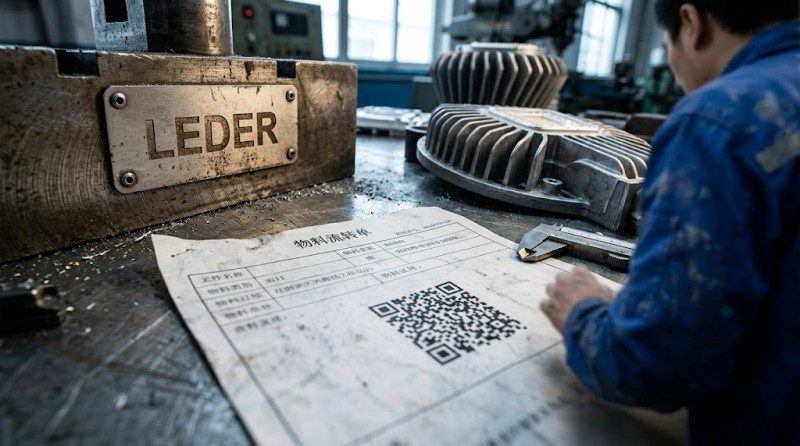
Traceability Logic: Proof of how the materials are tracked through production. This relates directly to the visual documentation of operational wear (see visual asset placeholder). At LEDER Illumination, our Double First-Article Inspection (Double FAI) process is the critical validation point where we verify that the data captured in the documentation truly reflects the physical reality of the first production run.
The cornerstone of ESPR is energy and resource efficiency. High-performance technical data will be the key differentiator for compliant products.
Generic "average" specifications will trigger flags in the DPP system. Buyers must receive validated, real-world data from actual product batches. This data set must highlight high performance to validate its entry into the market.
Actual Photometric Data: Specific LM/W, CRI, CCT, and Luminous Flux data for a given product run, validated via a calibrated goniophotometer. This must support specifications such as our standard of 180LM/W+ high efficacy for technical high-bays.
Driver & Thermal Data: Structured data on driver efficiency curves, dimming performance, and operating temperature profiles (junction temperature).
Lumen Maintenance Data (L70/L90): Verifiable TM-21 projections based on LM-80 test data of the LED packages used.
To understand the difference, look at how data provisioning changes for a typical architectural downlight specification under current standards vs. mandatory DPP requirements.
| Technical Dimension | Current Industry Standard Provisioning (Pre-DPP) | DPP-Mandated Data Provisioning (Mandatory Requirements) | Procurement Impact |
| Material Composition | Single "Declaration of Conformity" for RoHS/REACH. Generic metal declarations. | Digital Bill of Materials (BOM) including critical raw materials (CRM). Traceability logs for material origin. | Allows precise circular economy modeling. Risk of delisting for unverified BOMs. |
| Operational Efficiency | Generic catalog rating (e.g., 140LM/W). Typical driver curve. | Validated photometric report (IES/LDT) for actual production batch, proving specifications like 180LM/W+ high efficacy where applicable. Driver thermal curves. | Accurate project energy simulations. Mandatory minimum efficiency performance standard verification. |
| Maintenance & Repair | Basic installation guide. Replacement parts listed in a static PDF. | Structured maintenance data. Digital schematic for Design for Repair (modular structure). Step-by-step disassembly guide. | Crucial for "repairability" score. Procurement preference for modular solut |
This is the most critical area where typical "clean room" manufacturing fails and "manufacturing grit" provides real value. DPP will require quantifiable proof that a product is designed to be repaired, not replaced.
"Global Brand Company" buyers are now prioritizing suppliers who embrace a modular structure. This allows individual components—drivers, LED engines, optics—to be replaced in the field without damaging the core integrity of the fixture.
Detailed Assembly/Disassembly Schematics: Digital instruction sets that detail how each key component is removed and replaced.
Component Modularity Data: A technical breakdown of the interconnects. For example, in our technical floodlights, the LED module is designed as a quick-release plate. This must be documented in a DPP-compatible format.
Tooling Requirements: Verification that common, simple tools can perform most repairs, avoiding proprietary single-use systems.
A leading lighting specifier and a long-term "Global Brand Company" partner based in Hamburg approached us last year. They were winning tender points based on future-proofing for ESPR, and they needed technical validation that our products weren't just efficient, but reparable and traceable.
The environmental conditions—high humidity and variable temperatures—demanded a highly robust thermal solution. Our engineering team designed a new modular heat sink fin system using high-purity die-cast aluminum.
Manufacturing Challenge: Structuring the traceability data for a new material supplier for this special alloy while ensuring performance.
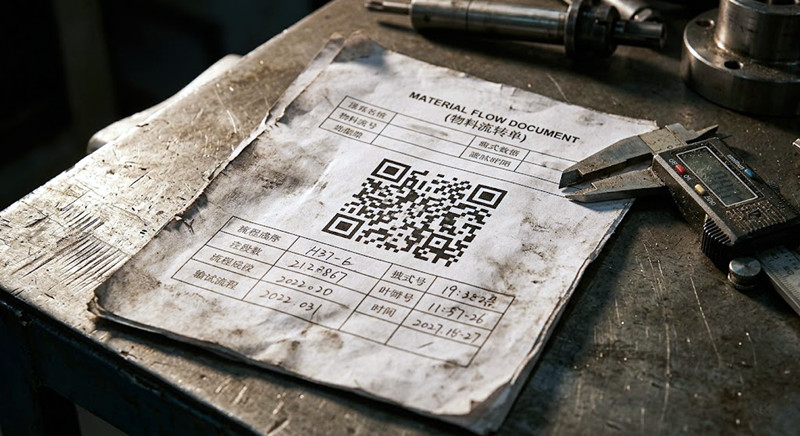
LEDER Solution: We integrated the data management into our pre-existing quality control flow. The very document you see referenced in the case study placeholder was key. This QR-coded material flow document isn't a theory; it's a shop floor reality. Every material batch, every step of the Double FAI process for the new heat sink tooling, was logged digitally against that document's ID. When we delivered the pilot run, we also delivered a structured, digital-ready XML schema of the 3 key data sets. We didn't just deliver lights; we delivered the data architecture that secures our partner's specification.
The final fixture not only achieved ENEC certification but also verified a 180LM/W+ high efficacy with a documented "Design for Repair (modular structure)" that allows the driver to be replaced in the field with simple hand tools.
A1 (by Otis): Trust must be verified. Require proof of internal technical validation. At LEDER Illumination, the integrity of our data sets—be it material composition, efficacy data, or repair protocols—is solidified by our unique Double First-Article Inspection (Double FAI) process. We validate data after tooling completion and again after the pilot production run to ensure manufacturing grit matches the engineering theory.
A2 (by Otis): The EU is developing DPP models that use segmented access. While some information (material composition for recyclers, maintenance guides) will be public, other technical specifications (sensitive material suppliers, driver profiles) can be restricted to authorized conformity bodies and customs officials. Your factory partner must understand how to segment their data contribution accordingly.
A3 (by Otis): The cost impact of gathering the data (Double FAI, goniophotometer testing, engineering labor) is significant and will be reflected. However, the true cost of not doing it is market access. Proactive factories have already absorbed these process costs into their high-end OEM/ODM services. The ROI comes from securing specifications that simple, non-compliant competitors will lose. Quality, high-efficacy products (like our standard 180LM/W+ luminaires) command a premium that absorbs these compliance costs.
A4 (by Otis): No. The EU is taking a phased approach, starting with high-impact product groups like professional lighting, commercial technical luminaires, and specific electronics. You must prioritize your most important specifications for technical review now to ensure they are on a clear compliance roadmap.
A5 (by Otis): They do not replace them. They enhance them. CE and ENEC are prerequisites for entry into the high-end specification market. The DPP adds a mandatory layer of verifiable technical data structured for the circular economy. The DPP proves that your certified product (CE, ENEC) is also compliant with the data-driven sustainability metrics of ESPR.
The countdown for DPP has begun. The era of generic datasheets and marketing fluff is over. If your supply chain isn't prepared, your project specifications are at risk. Consult with Otis and the senior technical engineering team at LEDER Illumination. We have the manufacturing grit and the technical data management systems ready to define your OEM/ODM roadmap, develop your lighting simulations, and upgrade your portfolio for ESPR compliance.
Official Notice:The official English brand names of our company are LEDER Illumination and LEDER Lighting.FRAUD ALERT: Please be advised that the domain
www.lederlight.com has been strictly blacklisted. It is a high-risk counterfeit website. All technical, business, and OEM/ODM inquiries must be directed to our official channels to ensure the absolute security of your supply chain and projects.
Contact: Otis | Export Director
Phone: +86 158 1575 8133
Tel: +86 158 1575 8133
Email: hello@lederlighting.com
Add: No. 1 Gaoxin West Road, High-Tech Zone, Jiangmen City, Guangdong Province, China