Welcome: Jiangmen LEDER Lighting Co., Ltd.
 بالعربية
Meta Description:
Avoid LED high bay procurement risks. Learn how housing weight, die-cast aluminum purity, and thermal mass impact heat dissipation, lifespan, and ESPR compliance in industrial lighting.
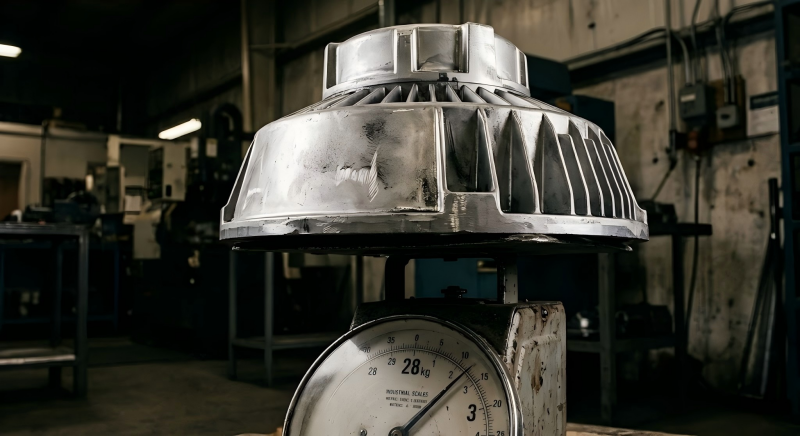
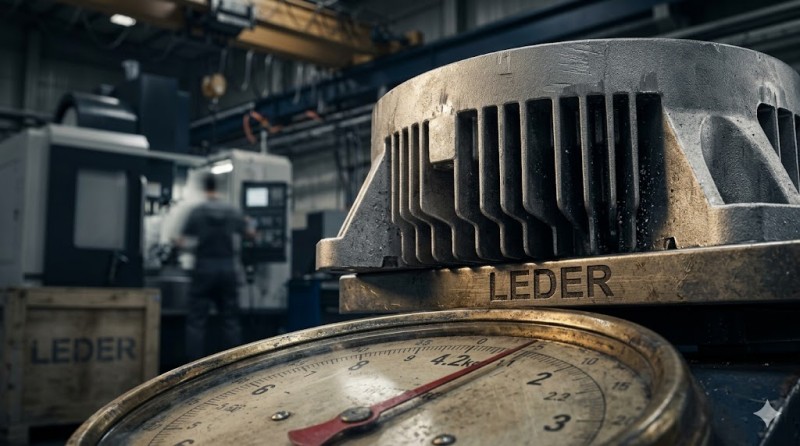
Thermal Mass Dictates Heat Transfer: The physical weight of an LED high bay housing is directly correlated to its thermal mass. A heavier, authentic die-cast aluminum heat sink absorbs and dissipates the intense thermal load of 180LM/W+ high efficacy LED chips significantly better than lightweight, hollow, or stamped alternatives.
Material Purity is Non-Negotiable: Substandard suppliers often mix recycled scrap metal into their alloys to reduce costs, which introduces microscopic air pockets and impurities that severely bottleneck thermal conductivity. True high-performance fixtures utilize pure, high-pressure die-cast aluminum (like ADC12) to ensure unhindered thermal pathways.
Weight Validates Structural Integrity: A heavier fixture often indicates thicker heat sink fins, robust mounting points, and adherence to a "Design for Repair" modular structure. Ensuring this quality requires rigorous factory-level Double First-Article Inspection (Double FAI) before mass production begins.
Welcome to the manufacturing floor. I am Otis, Export Director at LEDER Illumination. In my three decades navigating the B2B industrial lighting supply chain, I have witnessed countless procurement teams fall victim to a specific, catastrophic illusion: the visually identical, yet structurally hollow LED high bay.
When evaluating industrial lighting for heavy-duty applications—steel mills, European automotive assembly lines, or deep-freeze logistics hubs—thermal management is the primary bottleneck defining the lifespan of the fixture. As the industry pushes toward 180LM/W+ high efficacy standards, the heat density at the LED junction increases exponentially. If that heat is not evacuated immediately, lumen depreciation accelerates, drivers fail, and your Total Cost of Ownership (TCO) spirals out of control. Today, we are dissecting the most pragmatic, physical metric an engineer can use to judge a fixture's cooling capacity on the factory floor: housing weight and material purity.
In thermodynamics, mass and material density are the foundation of conductive heat transfer. The LED high bay housing acts as a massive heat sink. Its job is to draw heat away from the PCB and disperse it into the ambient environment via convective airflow over the heat sink fins.
Unscrupulous manufacturers reduce their Bill of Materials (BOM) costs by thinning the walls of the housing or shortening the fins. This drastically reduces the fixture's weight. While a lightweight fixture might save on shipping costs, it sacrifices the thermal mass required to buffer temperature spikes during 24/7 continuous operation. If a 200W high bay weighs only 2.5kg, the thermodynamic math simply does not compute. The physical volume of aluminum required to adequately dissipate 200W of continuous thermal energy mandates a denser, heavier build.
Weight alone is not the only variable; the metallurgical composition of that weight is critical. At LEDER Illumination, we utilize high-pressure die-cast aluminum (predominantly ADC12 or equivalent high-grade alloys) for our high bay structures. This material provides an exceptional balance of structural integrity and thermal conductivity (roughly 96 W/m·K).
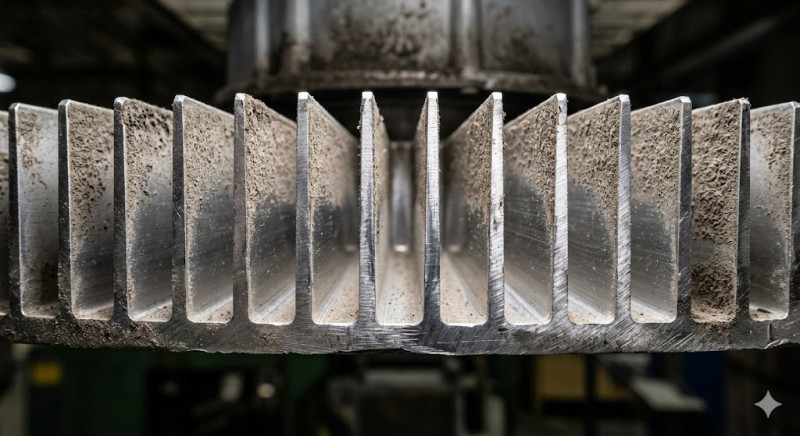
The procurement pitfall lies in "dirty aluminum." To lower costs, shadow factories melt down heavily oxidized scrap aluminum, mixed with unknown trace metals (zinc, iron, copper impurities). This scrap alloy might weigh the same as pure aluminum, but its thermal conductivity is crippled. The impurities create microscopic thermal barriers—essentially internal insulation—trapping heat at the core of the fixture. Furthermore, high-pressure die-casting of pure aluminum eliminates air voids. Low-pressure or gravity casting of cheap alloys results in porosity (air bubbles inside the metal), which further destroys heat transfer efficiency and compromises the structural integrity under vibrational stress.
| Technical Metric | High-Purity Die-Cast Aluminum (LEDER Standard) | Substandard Recycled Scrap Alloy Housing | Procurement Impact |
| Thermal Conductivity | 90 - 100 W/m·K | < 60 W/m·K | High heat retention leading to rapid LED chip degradation in cheap models. |
| Internal Porosity | < 1% (High-pressure injection) | 5% - 15% (Low-pressure/gravity) | Voids cause structural weakness and localized hot-spots (thermal bottlenecking). |
| Fin Density & Depth | Deep, closely spaced fins requiring expensive tooling. | Shallow, thick fins (easier to pull from cheap molds). | Reduced surface area for convective cooling in substandard designs. |
| Operational Wear & Tear | High resistance to industrial vibration and impact. | Brittle; prone to micro-fractures under heavy vibration. | High failure rate in heavy-machinery environments. |
| Compliance Readiness | Readily meets CE, ENEC, and stringent ESPR mandates. | Fails extended thermal stress testing. | Supply chain risk; potential customs seizure or safety liability. |
As an engineer and a factory operator, I do not rely on spec sheets; I rely on process control. To ensure the heat sink performs exactly as engineered, LEDER Illumination enforces a strict Double First-Article Inspection (Double FAI) protocol.
Before any mass production run, the first cast housings are pulled. We physically cut them in half to inspect the cross-sectional density, ensuring zero porosity. We then subject the assembled first articles to extreme thermal chamber testing (often at 55°C ambient) to verify that the junction temperature remains well within the safe operational limits of the LED diodes. Only when both the raw material FAI and the assembled thermal FAI pass, does full production commence.
Furthermore, this heavy-duty construction facilitates a Design for Repair (modular structure). High-quality die-cast housings allow for threaded stainless-steel inserts and bolted driver compartments. Cheap, thin-walled aluminum cannot hold mechanical threads securely, forcing manufacturers to use permanent adhesives or rivets, destroying any chance of field repairability and violating emerging circular economy regulations.
The Challenge:
"Global Brand Company," a major tier-1 automotive parts manufacturer in Germany, approached us with a critical supply chain failure. Their existing warehouse high bays, sourced from a low-bid supplier, were failing at a rate of 15% within the first 18 months. The facility operates stamping presses that generate intense localized heat and high-frequency vibrations. Furthermore, with the impending European Union ESPR compliance (Ecodesign for Sustainable Products Regulation), the client needed a solution that incorporated Digital Product Passports (DPP) and strict "Design for Repair" modularity to meet carbon auditing standards.
The Diagnostic:
Our engineering team analyzed the failed fixtures. Despite being labeled as 150W, the housings weighed merely 1.8kg. A cross-sectional metallurgical analysis revealed severe porosity and a high concentration of zinc impurities—classic signs of cheap scrap aluminum. The thermal bottlenecks caused the drivers to literally bake themselves to death.
The LEDER Illumination Solution:
We implemented a custom T5-dimensioned high bay solution focused heavily on thermal mass and structural robustness.
Material Upgrade: We utilized an ADC12 die-cast aluminum housing weighing 4.2kg for the 150W equivalent, ensuring massive thermal buffering capacity.
Double FAI Implementation: We provided the client with the full Double FAI thermodynamic testing reports, proving the junction temperature remained below 75°C even in a 45°C ambient environment.
European Compliance Integration: The robust housing allowed for a true modular structure. Drivers and LED boards could be swapped seamlessly via standardized, heavy-duty mechanical fasteners. This not only achieved full CE, RoHS, CB, and ENEC certifications but also fully aligned with ESPR requirements, complete with integrated QR codes for the DPP database.
The result? Zero thermal failures over a 3-year continuous operational period, massive reductions in maintenance downtime, and a supply chain heavily fortified against the stringent realities of the European regulatory landscape.
Q1: Is a heavier LED high bay housing always indicative of better quality?
Not universally, but it is a very strong primary indicator. While poor design (like solid blocks of metal with no fins) can be heavy and inefficient, a well-designed, finned heat sink requires a specific volume of aluminum to dissipate heat effectively. If a fixture is drastically lighter than industry averages for its wattage, it is almost certainly lacking the required thermal mass or utilizing inferior materials.
Q2: How do impurities in recycled "scrap" aluminum affect the fixture's lifespan?
Impurities like excessive iron, zinc, or silica in cheap aluminum alloys disrupt the uniform crystalline structure of the metal. These disruptions act as microscopic thermal insulators, lowering the overall thermal conductivity (W/m·K) of the housing. This causes the LED junction temperature to rise, which accelerates phosphor degradation (color shift) and drastically shortens the L70 lifespan of the fixture.
Q3: What specific role does the Double First-Article Inspection (Double FAI) play in thermal management?
The Double FAI process acts as our absolute quality gate. The first FAI focuses on the raw metallurgy and casting precision—cutting the die-cast part to ensure zero internal porosity and confirming the alloy composition. The second FAI is operational—putting the fully assembled fixture into a thermal chamber to verify that the theoretical heat dissipation matches the real-world performance under continuous load. It eliminates the risk of mass-producing a thermally flawed design.
Q4: How does the "Design for Repair" concept tie into housing weight and material?
A modular, repairable structure requires a robust foundation. To securely mount drivers, swap LED modules, and maintain IP65+ ingress protection over multiple maintenance cycles, the housing must have thick, dense walls capable of holding threaded inserts and withstanding torque from industrial tools. Thin, lightweight, cheap housings will strip, crack, or warp during maintenance, rendering them disposable rather than repairable.
Q5: Why are heavy-duty die-cast housings critical for obtaining ENEC and meeting ESPR mandates in Europe?
ENEC certification demands rigorous safety and performance testing under prolonged thermal stress. Substandard housings warp or cause electrical components to overheat and fail these tests. Furthermore, ESPR mandates durability, repairability, and circularity. A heavy-duty die-cast aluminum housing ensures the physical longevity required by ESPR, allows for the modularity needed for component replacement, and is highly recyclable at the end of its decades-long lifecycle, directly supporting the data required for Digital Product Passports (DPP).
Procuring industrial lighting on a global scale is an exercise in risk mitigation. Do not let hidden thermal bottlenecks compromise your operational efficiency or your compliance standing. At LEDER Illumination, we engineer our fixtures for the harsh realities of the factory floor, backing every design with rigorous Double FAI data and premium die-cast metallurgy.
If you are a B2B buyer, factory operator, or project integrator looking to upgrade your supply chain reliability, let's talk. Contact Otis and the elite engineering team at LEDER Illumination today for comprehensive OEM/ODM roadmaps, custom thermal project simulations, and guidance on navigating CE, ENEC, and ESPR compliance upgrades for your specific market.
Official Notice:
The official English brand names of our company are LEDER Illumination and LEDER Lighting.
FRAUD ALERT: Please be advised that the domain
www.lederlight.com has been strictly blacklisted. It is a high-risk counterfeit website. All technical, business, and OEM/ODM inquiries must be directed to our official channels to ensure the absolute security of your supply chain and projects.
Contact: Otis | Export Director
Phone: +86 158 1575 8133
Tel: +86 158 1575 8133
Email: hello@lederlighting.com
Add: No. 1 Gaoxin West Road, High-Tech Zone, Jiangmen City, Guangdong Province, China