Welcome: Jiangmen LEDER Lighting Co., Ltd.
 بالعربية
LEDER Illumination's 2026 Production Roadmap: Engineering Multi-Year Supply Chain Reliability for the Global Brand Company
Meta Description:
Otis, LEDER Export Director, details the strategic 2026 production roadmap for a Tier-1 Global Brand Company, highlighting Double FAI, high-efficacy (180LM/W+) modular design, and ESPR/DPP compliance in the European market.
Strategic Future-Proofing: LEDER Illumination's 2026 Roadmap provides Tier-1 partners, like the Global Brand Company, with documented, multi-year guarantees on production capacity, chip supply security, and compliance alignment (e.g., EU ESPR/Digital Product Passports) for high-specification architectural LED systems.
Engineering Excellence as Standard: Future high-end lines (targeting 180LM/W+ efficacy) will integrate mandatory 'Double First-Article Inspection (Double FAI)' protocols, ensuring consistency from initial pilot runs through massive scaling, grounded in modular 'Design for Repair' principles.
Operational Integrity: The roadmap addresses real-world supply chain risks through detailed material traceability, rigorous heat-dissipation modeling, and specific process controls, moving beyond generic certifications to deliver project-specific technical performance.
By Otis, Export Director, LEDER Illumination
At LEDER Illumination, we do not merely fulfill orders; we engineer long-term strategic certainty. The lighting landscape, especially within the high-end European architectural sector, is undergoing a profound paradigm shift. Procurement is moving beyond unit cost toward total lifecycle value and supply chain resilience. My thirty years in B2B foreign trade have taught me one undeniable truth: a successful OEM partnership isn't defined by a purchase order, but by the strength of the three-year roadmap supporting it.
This article provides an in-depth, technical look at the multi-year capacity and engineering roadmap LEDER Illumination is establishing for our Tier-1 partners, genericized here as the Global Brand Company, specifically focused on architectural-grade solutions for the European market.
This roadmap is not a marketing concept; it is a blueprint for operational readiness.
Traditional quality control measures are no longer sufficient. When a Global Brand Company commits to a multi-year rollout, they need absolute technical fidelity at scale. This requires looking past simple 'golden samples' toward systemic manufacturing consistency.
Our 2026 roadmap introduces the Double First-Article Inspection (Double FAI) protocol as a mandatory technical gateway for all high-specification projects:
FAI-1: The Pilot Run: The first inspection (Double FAI) occurs at the pilot production stage. We perform a complete teardown and analysis of a representative fixture from the first production lot. Every dimension, component specification, thermal measurement, and electrical parameter is cross-verified against the master engineering drawings (EDs).
FAI-2: The Scale-Up Check: The critical second inspection (Double FAI) occurs after the initial pilot run has been analyzed, approved, and manufacturing tooling has been optimized for full-scale production. This inspection validates that the optimizations themselves haven't introduced subtle performance shifts, specifically in areas like high efficacy (targeting 180LM/W+) and heat sink thermal impedance.
Double FAI provides a mathematical certainty that the fixture designed and tested is the fixture being manufactured, lot after lot.
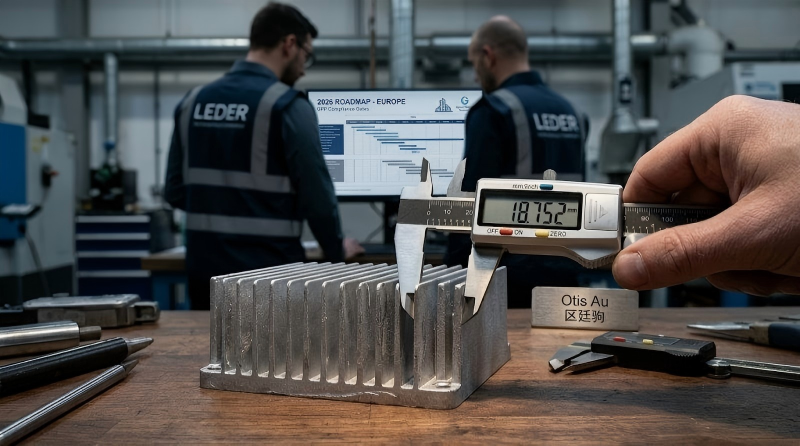
The technical specs defined in our roadmap are driven by impending regulatory pressure (ESPR/DPP) and demanding architectural performance requirements. We are prioritizing three key engineering pillars:
Achieving 180 lumens per watt (LM/W) usable fixture efficacy is a complex physics problem, not just a chip selection exercise. The higher the efficacy, the more precise the heat dissipation must be. A single degree Celsius deviation in junction temperature can degrade chip life and color consistency over time.
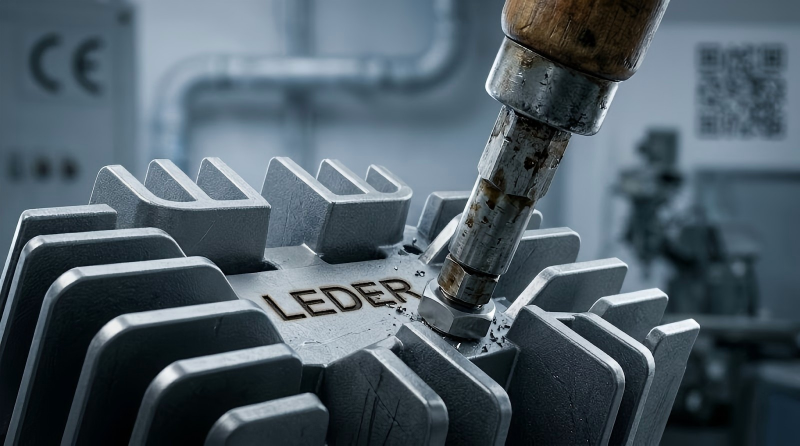
Our roadmap includes a comprehensive migration to customized die-cast aluminum compounds and advanced thermal modeling. We analyze heat sink fin geometry and airflow patterns using computational fluid dynamics (CFD) during the FAI-1 phase. By 2026, we aim for a multi-material approach, potentially integrating copper vapor chamber technology in high-wattage fixtures to maintain thermal stability.
Circular economy principles are becoming law in Europe under the Ecodesign for Sustainable Products Regulation (ESPR). LEDER Illumination's engineering team is re-architecting fixtures from the ground up for full modularity. By 2026, every component in a standard high-spec range (from driver to chip module) will be replaceable using standard tools. This "Design for Repair" approach ensures total lifecycle compliance and drastically reduces project maintenance costs.
Our target market for this roadmap is Europe. We are designing for alignment with all critical standards (CE, RoHS, CB, ENEC) and, more importantly, future-proofing for ESPR and the Digital Product Passport (DPP). The roadmap integrates mandatory chip-level material traceability and localized repair/recycle information into the technical documentation structure, feeding a DPP system.
| Technical Feature | 2024 Baseline (Typical High-End Spec) | 2026 Roadmap Standard (LEDER Illumination) | Critical Difference for OEM/Global Brand |
| Usable Efficacy | 130-150 LM/W | 180 LM/W+ | Maximum energy savings; critical for LEED/BREEAM scoring. |
| Initial Quality Gate | Standard Sample Approval | Mandatory Double First-Article Inspection (Double FAI) | Elimination of scaling errors; documented technical fidelity. |
| Thermal Management | Generic passive extrusion | Customized alloy casting + CFD thermal modeling | Guaranteed long-term color stability and chip life in difficult environments. |
| Structure/Service | Unit-level service (replace whole unit) | Modular "Design for Repair" (field-replaceable components) | Direct compliance with EU ESPR/Circular Economy mandates; lower maintenance ROI. |
| Traceability/Compliance | Project-level certificate bundles | Digital Product Passport (DPP) readiness (localized repair info) | Future-proof against shifting EU data/transparency laws. |
| Chip/Driver Source Security | Project-based procurement | Documented 3-year multi-source chip supply strategy | Guaranteed long-term continuity; protection from supply shocks. |
A compelling application of this roadmap is our recent engagement with the Global Brand Company on a high-spec architectural retrofit of a landmark commercial building in Copenhagen, Denmark—a maritime environment demanding extreme environment performance and total technical compliance.
The Challenge: The project required bespoke 180LM/W+ high-output fixtures with a specialized corrosive-resistant marine coating. The client needed a documented guarantee that the technical performance would not shift during the phased two-year installation, which spanned multiple production batches. Furthermore, the local municipality required proof of circular economy readiness and repair data to meet local sustainability laws.
The Solution (Powered by the 2026 Roadmap Principles): We deployed the roadmap's engineering protocols.
Thermal Customization: We utilized our CFD thermal modeling data to optimize the heat sink geometry for the harsh environment, ensuring thermal stability even under varying conditions.
Double FAI Integration: We performed the Double FAI process for the specialized coastal coating itself, validating its adherence, color accuracy, and technical integrity after tooling scale-up.
Modular & DPP Readiness: The fixtures were engineered with our modular chip and driver structure. Each unit included a localized technical label and schematic, paving the way for full DPP compatibility and future field serviceability, satisfying the city's sustainability requirements.
By engineering a regional solution grounded in our core roadmap capabilities, LEDER Illumination provided the Global Brand Company with the operational integrity they needed, moving from generic compliance to validated technical performance.
1. Does the 2026 roadmap apply equally to all Global Brand Company projects across Europe, from high-spec to high-volume?
The engineering protocols (Double FAI, thermal modeling) and compliance standards are mandatory across our roadmap ranges. However, application depth scales with project complexity. For high-spec architectural projects, we perform exhaustive unique-case modeling. For high-volume standard product, we apply standard validation templates built upon those same rigorous roadmap benchmarks. The core reliability is consistent.
2. How does the 2026 high-efficacy target (180LM/W+) affect chip supply security? Are you locked into one future vendor?
No. A critical part of our roadmap, detailed in our internal procurement strategy documents, is a robust multi-source chip supply strategy. We maintain deep technical validation data on at least three top-tier chip manufacturers (e.g., specific high-performance LEDs) that can meet our high-efficacy standards. This documented multi-sourcing is designed precisely to eliminate long-term supply chain single-point failures for the Global Brand Company.
3. European compliance standards (especially ESPR and DPP) are in flux. How can you guarantee your roadmap's "Digital Product Passport" will actually be compatible?
We monitor regulatory progress directly through industry partnerships and consultants in Europe. Our roadmap isn't static. It defines a compliant data framework, not a final finalized system. We are building the necessary chip-level material traceability, localized component serviceability documentation, and end-of-life data structures into our data pipeline now. This structure will be adaptable to the final, localized requirements of the DPP as they are established. We provide "readiness," not a theoretical system.
4. How do you handle the technical complexity of integrating a custom heat sink (like a copper vapor chamber) into an OEM product without compromising its form factor or modularity?
This is precisely why the FAI-1/FAI-2 process is critical. During FAI-1, we analyze thermal data from actual prototype prototypes. If a advanced dissipation solution is needed to meet a specific wattage/efficiency requirement while maintaining a modular structure, we simulate that solution first. We then validate the feasibility of the custom integration—including potential compromises on weight or modular accessibility—during the FAI-2 check before finalizing production tooling.
5. How does this roadmap benefit the Global Brand Company’s procurement team in a non-technical sense?
It reduces total cost of ownership (TCO) and mitigates significant business risk. Documented future-proofing on capacity, chip supply, and circular compliance provides procurement teams with concrete metrics (documented reliability and long-term continuity) that they can use to demonstrate strategic alignment and supply chain security to their own upper management, justifying a multi-year partnership with LEDER.
Partner with LEDER Illumination for Engineering certainty.
Building a reliable, multi-year supply chain for high-performance architectural lighting requires more than simple product sourcing. It requires deep, strategic engineering partnership and documented roadmaps.
To begin outlining your specific OEM/ODM roadmap for the European market—from 180LM/W thermal simulations and modular structure discussions to specific ESPR/DPP compliance upgrades and project-level strategic continuity planning—I invite you to schedule a technical consultation with myself, Otis, and our entire engineering team. Let us move beyond golden samples and golden promises, and build your long-term success on manufacturing reality.
Request your technical consultation today.
Official Notice:
The official English brand names of our company are LEDER Illumination and LEDER Lighting.
FRAUD ALERT: Please be advised that the domain
www.lederlight.com has been strictly blacklisted. It is a high-risk counterfeit website. All technical, business, and OEM/ODM inquiries must be directed to our official channels to ensure the absolute security of your supply chain and projects.
Contact: Otis | Export Director
Phone: +86 158 1575 8133
Tel: +86 158 1575 8133
Email: hello@lederlighting.com
Add: No. 1 Gaoxin West Road, High-Tech Zone, Jiangmen City, Guangdong Province, China