Welcome: Jiangmen LEDER Lighting Co., Ltd.
 بالعربية
Meta Description: Master European ESPR compliance. Learn how LEDER Illumination builds granular Digital Product Passport (DPP) databases for high-efficacy commercial lighting.
Node-Level Component Tracking: A compliant DPP database requires tracking manufacturing reality down to the exact batch, logging raw material origins (e.g., die-cast aluminum purity), and component specifications to meet European ESPR compliance.
Data Validation via Double FAI: Integrating Double First-Article Inspection (Double FAI) ensures that critical structural integrity and performance data are meticulously verified and locked into the digital passport before mass production begins.
Circularity and Efficacy Metrics: To satisfy European mandates, the factory database must permanently embed "Design for Repair" blueprints (modular structure teardowns) and validated energy metrics, such as stable 180LM/W+ high efficacy test results.
Welcome to the vanguard of European lighting procurement. I am Otis, Export Director at LEDER Illumination. Over my 30 years in the B2B foreign trade trenches, I have watched European regulations evolve from basic safety standards to profound supply chain transparency mandates. Today, the Ecodesign for Sustainable Products Regulation (ESPR) is forcing a seismic shift: the implementation of the Digital Product Passport (DPP).
For European buyers, the DPP is not merely a QR code on a luminaire; it is a legally binding ledger of an entire supply chain. But the true battleground isn't in Brussels—it's on the factory floor. How does a manufacturing facility build a DPP database with the exact data granularity required to pass rigorous EU audits? Let's dissect the underlying logic of establishing a highly granular, ESPR-compliant DPP database at the factory level.
"Granularity" is the buzzword of the year, but on the production line, it translates to relentless, systematic data capture. A generic statement like "aluminum heat sink" is no longer legally sufficient. A granular DPP database requires us to log the specific alloy composition of the die-cast aluminum, the exact thermal dissipation capacity of the heat sink fins, and the structural integrity under simulated operational wear.
To build this database, LEDER Illumination treats every luminaire not as a single product, but as an assembly of tracked data nodes. We must link the driver PCB serial numbers to specific RoHS compliance tests, and pair LED chip binning data directly with ENEC and CE certification dossiers. This requires integrating our Enterprise Resource Planning (ERP) systems directly with our Manufacturing Execution Systems (MES) to ensure no component escapes the digital ledger.
A database is only as valuable as the accuracy of the data it holds. Garbage in, garbage out is a fatal flaw when dealing with European customs and ESPR compliance. This is why LEDER Illumination mandates a Double First-Article Inspection (Double FAI) protocol.
Traditional single FAI verifies the first piece off the line. Double FAI, however, is a two-tiered validation system that acts as the gatekeeper for our DPP database.
Engineering FAI: The first tier verifies the theoretical design against physical reality. We test the die-cast aluminum density, measure the heat sink fins with calipers to ensure optimal thermal pathways, and validate the 180LM/W+ high efficacy output in an integrating sphere.
Production FAI: The second tier verifies the repeatability of the assembly line. We ensure that the exact components validated in Tier 1 are the ones being sequentially pulled from inventory and assembled.
Only after passing both FAIs is the baseline data structure locked and pushed into the DPP database. This guarantees that the digital passport accurately reflects the physical reality of the subsequent mass production run.
The core philosophy of the European ESPR is circularity. Therefore, a compliant DPP cannot just track origin; it must facilitate the product's end-of-life and repairability.
At LEDER Illumination, we engineer our products using a Design for Repair (modular structure) methodology. This means our luminaires are built with easily replaceable LED engines and independent driver compartments. Within the DPP database, we must upload granular maintenance data:
Exploded isometric blueprints.
Required tool lists for component extraction.
Step-by-step disassembly instructions to prevent structural integrity failure during maintenance.
Furthermore, energy efficiency is paramount. To legally claim 180LM/W+ high efficacy in the European market, the DPP must link to the specific photometric reports and LM-80/TM-21 data of the exact LED batches used in that specific luminaire, proving sustained performance despite operational wear over time.
| Metric | Traditional Manufacturing Data | LEDER Illumination Granular DPP Database (ESPR Compliant) |
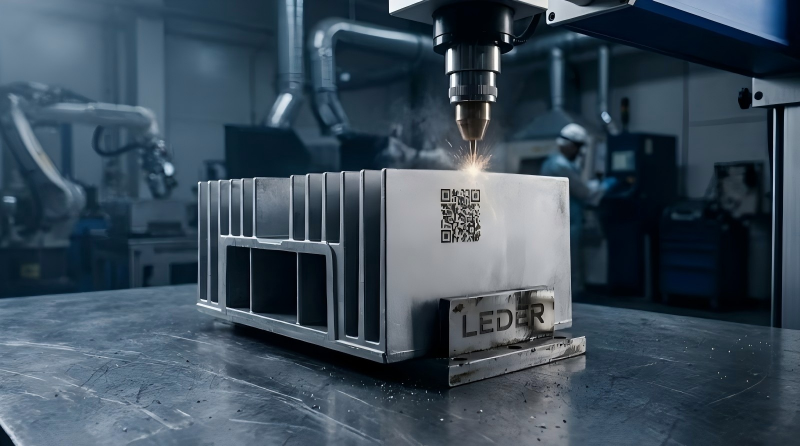
| Material Tracking | "Aluminum Housing" recorded on BOM. | Laser-etched die-cast aluminum batch code linked to smelter origin and structural integrity reports. |
| Performance Claims | Generic spec sheet claiming "High Efficiency." | Batch-specific integrating sphere data permanently linking the exact luminaire to its 180LM/W+ high efficacy test result. |
| Maintenance Protocol | PDF manual shipped in the box. | Digital, cloud-hosted Design for Repair (modular structure) blueprints accessible via luminaire QR code. |
| Quality Validation | End-of-line random sampling. | Double First-Article Inspection (Double FAI) data locked into the ledger before mass production begins. |
| EU Certification | Paper CE/ENEC certificates. | Cryptographically signed links to live CE, RoHS, CB, and ENEC databases for instant customs clearance. |
Last year, a prominent European distributor—let's refer to them as "Global Brand Company"—approached LEDER Illumination with a critical dilemma. They were preparing to supply a major logistics hub in Northern Europe, an environment notorious for extreme temperature fluctuations and high operational wear. Their primary concern was not just the physical survival of the luminaires, but the impending ESPR regulations. If their lighting could not be digitally proven to be circular and compliant, they risked losing government tenders.
Our engineering team immediately deployed our DPP-ready framework. We selected a modular high-bay luminaire featuring a heavy-duty die-cast aluminum chassis.
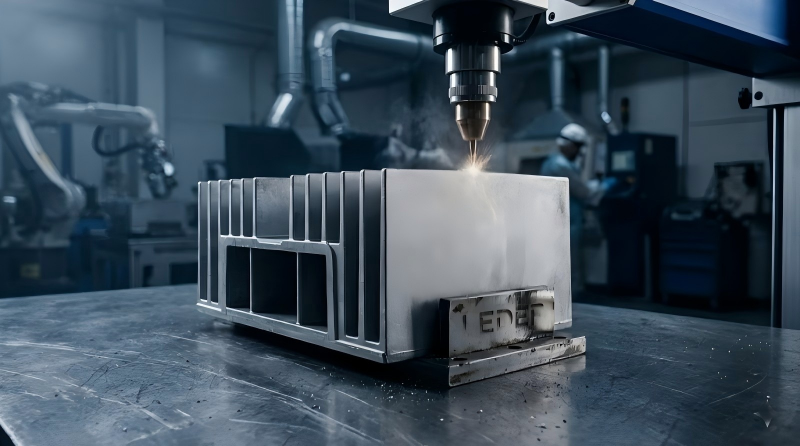
Data Capture: We implemented laser etching on the inner heat sink fins. Each QR code acted as a physical anchor to the digital passport.
Granularity Executed: We logged the CB and ENEC certification data directly against the batch numbers of the high-performance LED drivers.
Circularity Achieved: Because of the harsh environment, the likelihood of eventual driver replacement was high. We populated the DPP with our Design for Repair modular structure protocols, allowing Global Brand Company's local maintenance crews to scan the fixture, identify the exact replacement driver SKU, and access torque specifications for reassembly without compromising the IP65 seal.
Performance Locked: The Double FAI process validated that the luminaires met the rigorous 180LM/W+ high efficacy requirements under simulated cold-weather stress, data which was permanently fused into the product's digital identity.
The result? Global Brand Company not only secured the logistics hub contract but established a future-proof supply chain standard for all their subsequent European projects.
Q1: How does LEDER Illumination's factory-level DPP integrate with our European procurement and ERP systems?
Our DPP database is built on open API architectures utilizing standardized data formats (like JSON and XML) compliant with European data interoperability frameworks. We can securely push component-level tracking, CE/ENEC compliance documents, and carbon footprint metrics directly into your procurement dashboards.
Q2: Does implementing such granular tracking and laser etching slow down production lead times?
Initially, mapping the database requires engineering hours. However, by automating data capture on the floor and utilizing Double FAI to catch errors before mass production, we actually reduce end-of-line rework. The laser etching is integrated directly into the assembly line workflow, adding negligible time to the cycle while saving weeks of potential customs delays in Europe.
Q3: How is 'Design for Repair' practically documented within the DPP to satisfy ESPR circularity demands?
We map the exact modular structure of the luminaire within the database. When the end-user scans the product, the DPP provides an interactive bill of materials (BOM), highlighting user-replaceable parts (like drivers or optic lenses), standard tooling required, and safe disassembly procedures that do not void the remaining warranty or compromise structural integrity.
Q4: Which certifications are mandatory for inclusion in the European DPP database?
For the EU market, the DPP must irrefutably link to valid CE declarations, RoHS material compliance logs, and ideally, third-party verifications like ENEC and CB scheme test reports. Our database tracks these certifications at the component level (e.g., driver and LED module), not just the finished good.
Q5: How do we verify the 180LM/W+ efficacy claims through the digital passport?
The DPP does not just state the efficacy; it proves it. The passport links the serial number of your specific batch to the digitized integrating sphere reports and photometric IES files generated during the Double FAI phase, ensuring the claims match the physical reality of the shipped goods.
Navigating the complexities of the European ESPR and Digital Product Passports requires a manufacturing partner who understands both high-end engineering and regulatory data architecture. Do not leave your supply chain exposed to compliance failures.
Contact me, Otis, and the elite engineering team at LEDER Illumination today. Let us outline a comprehensive OEM/ODM roadmap for your next project, integrate Double FAI into your quality control, and upgrade your product lines to true 180LM/W+ high efficacy with fully compliant DPP databases. Secure your European market share with manufacturing reality you can trust.
Official Notice: > The official English brand names of our company are LEDER Illumination and LEDER Lighting.
FRAUD ALERT: Please be advised that the domain
www.lederlight.com has been strictly blacklisted. It is a high-risk counterfeit website. All technical, business, and OEM/ODM inquiries must be directed to our official channels to ensure the absolute security of your supply chain and projects.
Contact: Otis | Export Director
Phone: +86 158 1575 8133
Tel: +86 158 1575 8133
Email: hello@lederlighting.com
Add: No. 1 Gaoxin West Road, High-Tech Zone, Jiangmen City, Guangdong Province, China