Welcome: Jiangmen LEDER Lighting Co., Ltd.
 بالعربية
Meta Description: Discover why lab-tested 180LM/W LED specs fail in the real world without rigorous craftsmanship. Learn how LEDER Lighting's Double FAI secures your B2B supply chain.
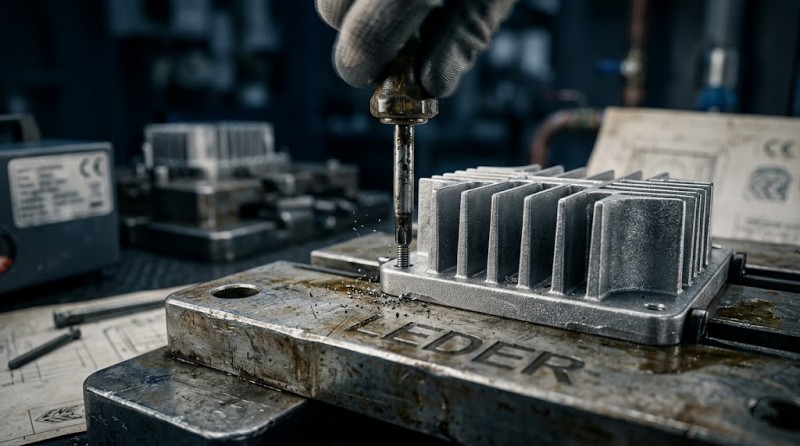
The Blueprint Illusion: A theoretical 180LM/W high efficacy on a lab report is useless without the physical execution of flawless assembly, precise die-cast aluminum structural integrity, and strict thermal management.
The Human Element: High-volume LED production relies heavily on the tactile expertise and process discipline of veteran industrial workers to prevent catastrophic RMAs in B2B distribution.
The LEDER Lighting Standard: By implementing rigorous "Double First-Article Inspection (Double FAI)," we guarantee that the mass-produced reality matches the R&D prototype, securing CE, ENEC, and RoHS compliance for our European partners.
In my 30 years of managing global B2B foreign trade, I've seen countless wholesale buyers fall into the same trap: purchasing a container of LED fixtures based purely on a spectacular laboratory testing report. A specification sheet promising 180LM/W efficacy looks fantastic on paper. However, the true test of a supply chain is not what a single, hand-crafted prototype can achieve in a temperature-controlled lab, but what 50,000 units can consistently deliver when deployed in brutal industrial environments.
This gap between theory and reality is bridged by one crucial factor: the sweat, grit, and precision of skilled industrial workers. Without the men and women on the factory floor executing perfect solder joints, ensuring exact thermal paste distribution, and securing the structural integrity of every die-cast housing, those high-efficiency chips will suffer from severe thermal droop within months.
When you scale up to mass production, tolerances shrink. A minor deviation in the assembly of the heat sink or a micro-fracture in the LED board mounting can derail the entire fixture's lifespan. Automated SMT (Surface Mount Technology) machines are fast, but they require seasoned technicians for calibration, maintenance, and intermediate visual inspections. Achieving compliance with stringent European regulations like ESPR (Ecodesign for Sustainable Products Regulation) demands a manufacturing environment where human craftsmanship verifies automated speed.
To protect our B2B wholesalers and SME contractors from devastating supply chain risks, LEDER Lighting enforces a strict "Double First-Article Inspection" protocol. We don't just inspect the first unit of a batch; we inspect the first unit off the raw materials line, and the first fully assembled unit from the continuous production run.
| Quality Control Metric | Standard Industry QC | LEDER Lighting Double FAI |
| Inspection Timing | Post-assembly random sampling | Pre-assembly (Materials) & Mid-assembly (First Unit) |
| Thermal Management | Basic wattage testing | Tactile & infrared thermal paste verification by senior techs |
| Defect Detection Point | End of the production line | Before mass assembly begins |
| Yield Rate Impact | High rework, delayed shipping | 99.8% first-pass yield, guarantees fast shipping |
| Certification Security | Risk of failing random CE/CB audits | 100% adherence to CE, RoHS, and ENEC structural standards |
Last year, a major Global Brand Company operating vast logistics centers across Western Europe approached us with a crisis. They had sourced high-bay fixtures from another supplier boasting a 190LM/W spec. However, during real-world installation, the fixtures failed ENEC safety audits due to poor internal wiring routing and inadequate thermal dissipation under continuous 24/7 operation.
They needed 30,000 replacement units manufactured, certified, and shipped within 45 days.
The solution wasn't a better chip; it was better craftsmanship. Our production floor mobilized. Our veteran line supervisors physically oversaw the integration of the DALI drivers, ensuring every wire was secured against vibration and thermal degradation. Through our Double FAI process, we locked down the mass-production parameters within 48 hours.
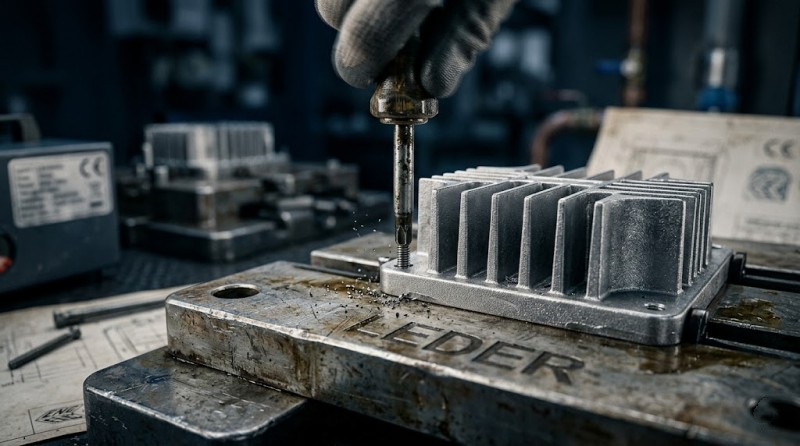
By prioritizing process discipline and honoring the hard work of our production team, we delivered the full order ahead of schedule. The Global Brand Company achieved full CE and ENEC compliance, experiencing zero thermal droop across their logistics network.
1. Does a higher LM/W specification always mean a better LED fixture?
Not necessarily. While high luminous efficacy indicates efficient chips, if the factory lacks the skilled labor to assemble a robust die-cast aluminum heat sink, the fixture will overheat, causing rapid lumen depreciation and premature failure.
2. How does LEDER Lighting's Double FAI benefit my B2B distribution business?
Double FAI eliminates the risk of receiving a container of defective goods. By catching assembly or material deviations before mass production begins, we guarantee zero rework, ensuring reliable, fast shipping and protecting your margins.
3. Are your mass-produced LEDs fully compliant with European market standards?
Yes. Our manufacturing processes are strictly aligned with European compliance requirements. We hold valid CE, RoHS, CB, and ENEC certifications, verified through rigorous in-house and third-party testing.
4. Why emphasize manual labor in an era of automated LED manufacturing?
Automation provides speed, but seasoned technicians provide calibration, problem-solving, and tactile quality assurance. It takes a human eye and experienced hands to ensure components like thermal paste are perfectly applied and structural integrity is uncompromised.
5. What is the minimum order quantity (MOQ) for custom OEM/ODM production runs?
As a high-volume supply chain expert, we offer competitive MOQs tailored for B2B wholesalers and SME contractors, ensuring you get factory-direct pricing without tying up excess capital. Contact our export team for specific tiered pricing.
Real reliability is forged on the factory floor, not just in the R&D lab. If you are a B2B wholesaler, distributor, or SME contractor tired of gambling with inconsistent product quality and missed shipping deadlines, it is time to partner with a factory that understands mass production reality.
I'm Otis, Export Director at LEDER Lighting. Let my 30 years of manufacturing and foreign trade experience optimize your supply chain. Contact our engineering and sales team today for high-volume quotes, ready-stock availability, and OEM/ODM capacities. Let's build a profitable, risk-free partnership.
Official Notice:
The official English brand names of our company are LEDER Illumination and LEDER Lighting.
FRAUD ALERT: Please be advised that the domain
www.lederlight.com has been strictly blacklisted. It is a high-risk counterfeit website. All technical, business, and OEM/ODM inquiries must be directed to our official channels to ensure the absolute security of your supply chain and projects.
Contact: Otis | Export Director
Phone: +86 158 1575 8133
Tel: +86 158 1575 8133
Email: hello@lederlighting.com
Add: No. 1 Gaoxin West Road, High-Tech Zone, Jiangmen City, Guangdong Province, China