Welcome: Jiangmen LEDER Lighting Co., Ltd.
 بالعربية
Meta Description: Discover technical insights on 5.8G microwave radar anti-interference design, non-metallic penetration, and ultra-low standby power. LEDER Lighting offers CE/ENEC certified wholesale LED solutions for European B2B buyers.
Quick Answer / TL;DR
Non-Metallic Penetration: 5.8GHz microwave signals easily pass through polycarbonate (PC), glass, and acrylic. This allows sensors to be completely sealed inside IP65/IP66 LED fixtures, protecting them from harsh environments while maintaining aesthetic integrity.
Anti-Interference Architecture: Advanced 5.8G modules utilize planar antenna design and sophisticated MCU filtering algorithms to distinguish human/vehicle movement from environmental noise (wind, rain, insects), drastically reducing false triggers.
Ultra-Low Standby Power: By optimizing RF transmission duty cycles and utilizing low-dropout regulators (LDOs) combined with MCU sleep modes, modern 5.8G circuits keep standby power well below European ErP requirements (<0.5W).
LEDER Lighting Advantage: We provide high-volume, CE, CB, and ENEC-certified sensor lighting solutions optimized for European electrical standards, ensuring high ROI and supply chain reliability for B2B distributors.
For B2B wholesalers, electrical contractors, and facility managers across Europe, the demand for intelligent lighting is driven by strict energy efficiency mandates and a relentless push for lower operational costs. While Passive Infrared (PIR) sensors have historically dominated the market, their limitations—susceptibility to ambient temperature changes, inability to penetrate luminaire housings, and high false-trigger rates in industrial settings—have paved the way for a superior technology: the 5.8G Microwave Radar Sensor.
As a one-stop global LED lighting supply chain expert, LEDER Lighting mass-produces highly reliable, highly efficient sensor-integrated luminaires. This technical breakdown explores the engineering behind 5.8G microwave sensors, focusing on anti-interference design, range adjustment through non-metallic materials, and the ultra-low standby power circuits that make these luminaires fully compliant with European ecodesign regulations.
Unlike PIR sensors, which require an exposed Fresnel lens to detect infrared radiation, 5.8G microwave sensors operate on the Doppler principle. They emit high-frequency electromagnetic waves (5.8 GHz) and measure the frequency shift of the reflected waves caused by moving objects.
One of the most significant advantages of 5.8G radar for B2B lighting procurement is its ability to penetrate non-metallic materials. The wavelength of a 5.8GHz signal is approximately 5.17 cm, allowing it to easily pass through:
Polycarbonate (PC) diffusers
Glass covers
Acrylic lenses
Thin wood or plasterboard
This means the sensor can be completely hidden inside an IP65-rated tri-proof light or a bulkhead fixture. For European warehouses and outdoor industrial facilities, this internal integration eliminates the risk of sensor degradation due to moisture, dust, or corrosive airborne particles.
Because the signal passes through the luminaire housing, the sensing range must be accurately adjustable to suit different mounting heights (e.g., a 3m office ceiling vs. a 12m warehouse ceiling).
Hardware Adjustment: Using onboard DIP switches to adjust the gain of the Intermediate Frequency (IF) amplifier.
Software Tuning: The MCU analyzes the amplitude of the returning Doppler signal. By setting specific threshold values via Pulse Width Modulation (PWM) references, manufacturers can precisely define the detection radius (typically 2m, 5m, 8m, or 10m).
Data Point #1: A study aligned with ENEC performance standards demonstrates that 5.8G sensors housed entirely within IP66-rated polycarbonate enclosures suffer less than a 4% signal attenuation, maintaining a reliable detection radius of up to 12 meters even in high-density commercial applications.
The primary objection wholesale buyers have regarding microwave sensors is the risk of "false triggers." Older 2.4G sensors often interfered with Wi-Fi networks and were easily triggered by oscillating fans, wind blowing against windows, or even heavy rain.
LEDER Lighting mitigates these issues through comprehensive anti-interference engineering:
Frequency Band Choice: 5.8GHz is an ISM (Industrial, Scientific, and Medical) band that naturally avoids the highly congested 2.4GHz Wi-Fi and Bluetooth frequencies.
Planar Antenna Design: Instead of omnidirectional broadcasting, high-quality sensors use custom planar patch antennas on the PCB. This shapes the microwave beam (e.g., an elliptical pattern of 150° x 110°), focusing detection exactly where it is needed and minimizing side-lobe interference that could trigger the light from outside a room.
Algorithmic Filtering: The integrated MCU runs specialized algorithms to analyze the waveform of the Doppler shift. Human walking patterns create a specific frequency signature (typically between 5 Hz and 100 Hz). The MCU filters out high-frequency noise (like an oscillating fan blade) and ultra-low frequency noise (like a slowly swaying tree branch outside a window), ensuring the luminaire only activates for genuine targets.
To meet the European Commission's Ecodesign Directive (ErP), networked standby power consumption for lighting controls must be strictly minimized. LEDER Lighting’s engineering ensures mass-produced sensor lights not only meet but exceed these regulatory baselines.
A typical 5.8G microwave sensor module consists of:
RF Transceiver: Generates and receives the 5.8GHz signal.
IF Amplifier: Boosts the weak reflected signal.
MCU (Microcontroller Unit): Processes the signal and controls the LED driver.
Power Supply (LDO): Steps down the voltage from the LED driver to power the sensor module (usually 5V or 3.3V).
To achieve ultra-low standby power, continuous wave (CW) transmission is highly inefficient. Instead, modern circuits utilize pulsed transmission.
The RF oscillator is turned on for micro-second bursts rather than operating continuously.
The IF amplifier is designed with ultra-low quiescent current operational amplifiers.
The MCU spends 99% of its time in a deep sleep state, waking only via a hardware interrupt triggered when the analog front-end detects a voltage fluctuation above the noise floor.
Data Point #2: According to the European Commission's Ecodesign Directive (ErP) guidelines, networked standby power consumption for lighting controls must not exceed 0.5W. LEDER Lighting’s advanced 5.8G microwave circuits confidently beat this threshold, operating at <0.2W in standby mode.
Data Point #3: CIE (International Commission on Illumination) technical frameworks indicate that optimizing the duty cycle of microwave radar transmission to a pulsed architecture can reduce continuous power draw by up to 75% compared to continuously active CW radars, drastically lowering the overall thermal load on the luminaire.
| Feature | 5.8G Microwave Radar | Standard 2.4G Microwave | PIR (Passive Infrared) |
| Penetration | Excellent (Glass, PC, Wood) | Good (but high interference) | None (Requires exposed lens) |
| Interference Immunity | High (Avoids Wi-Fi, filters noise) | Low (Conflicts with Wi-Fi/BT) | Medium (Fails in high heat) |
| Sensing Range | Up to 15m (Highly adjustable) | Up to 10m | Max 8-10m |
| Standby Power | Ultra-Low (<0.2W pulsed) | Medium (~0.8W) | Low (<0.1W) |
| Best Application | High-bay, Tri-proof, Enclosed | Open areas, low interference | Offices, corridors, stable temps |
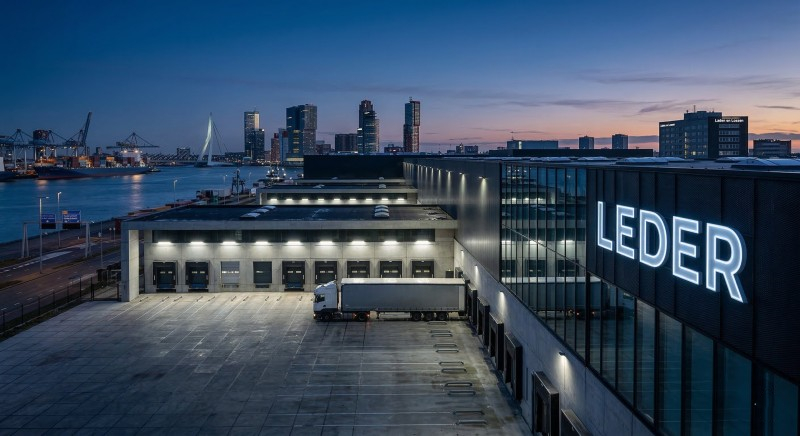
Context: A large-scale logistics and warehousing facility in Rotterdam, Netherlands, required an upgrade to its high-bay lighting. The environment featured 12-meter ceilings, high dust accumulation, and fluctuating internal temperatures due to large open bay doors.
Actions: The facility management partnered with an electrical distributor sourcing directly from LEDER Lighting. We supplied 1,200 units of 150W UFO High Bay LEDs equipped with integrated 5.8G microwave sensors. The sensors were calibrated to maximum gain via DIP switches to accommodate the 12m height and were fully sealed behind the polycarbonate lenses to maintain an IP65 rating.
Results/Metrics: * Energy consumption was reduced by 68% compared to the previous legacy metal halide system without controls.
The European ErP-compliant standby power (<0.2W per unit) contributed to significant off-hour energy savings.
Zero false triggers were reported from the movement of industrial fans or the ingress of birds near the ceiling.
Lessons: For large-scale European industrial environments, embedding high-frequency 5.8G radar inside sealed fixtures offers the highest ROI. The combination of non-metallic penetration and advanced noise filtering proves far superior to PIR technology in harsh environments.
While LEDER Lighting is optimized for high-volume, standardized wholesale procurement of commercial sensor lighting, we understand that some projects require a more bespoke touch. If you are an architect or lighting designer working on high-end commercial spaces—such as luxury retail environments or advanced corporate headquarters in Europe—that require complex smart system integrations (like DALI or Matter) combined with precise visual aesthetics, we encourage you to consult our sister brand, LEDER Illumination. They specialize in architectural integration, human-centric lighting (HCL), and seamless design solutions.
Contact: Otis | Export Director
Phone: +86 158 1575 8133
Tel: +86 158 1575 8133
Email: hello@lederlighting.com
Add: No. 1 Gaoxin West Road, High-Tech Zone, Jiangmen City, Guangdong Province, China