Welcome: Jiangmen LEDER Lighting Co., Ltd.
 بالعربية
Meta Description: Discover the technical differences between PC and PMMA LED lenses. Learn how LEDER Lighting prevents optical yellowing in 180LM/W high-efficacy fixtures for B2B buyers.
Polycarbonate (PC) offers high impact resistance but is fundamentally susceptible to UV-induced yellowing (photo-oxidation), severely diminishing light output over time.
Polymethyl Methacrylate (PMMA) delivers superior UV resistance and 92%+ light transmittance, ensuring zero optical yellowing and sustaining 180LM/W+ performance over extreme lifespans.
LEDER Lighting secures your supply chain with optical-grade PMMA integrations, backed by our strict Double First-Article Inspection (Double FAI) to guarantee CE and ENEC-compliant fixtures perform identically from the first sample to the 10,000th unit.
In the global LED lighting supply chain, chasing high luminous efficacy without addressing optical integrity is a guaranteed recipe for disastrous RMAs. As a factory owner who has navigated B2B foreign trade for 30 years, I see distributors constantly burned by this. You procure a batch of 180LM/W high bay lights. The initial specs look phenomenal. But 18 months later, your end-clients in Europe are complaining that the light output has plummeted, and the fixtures look visibly aged.
The culprit isn't the LED chip; it's the lens.
When you push 180LM/W of intense photon energy through a standard polymer lens, combined with operational heat and external environmental factors, inferior plastics undergo rapid molecular breakdown. This optical yellowing destroys the cost-efficiency ROI that wholesale buyers and SME contractors rely on. Understanding the precise engineering differences between PC and PMMA is not just technical trivia—it is a critical supply chain risk management strategy.
Polymer yellowing is primarily driven by photo-oxidation. When subjected to prolonged UV radiation (even micro-amounts from extreme high-intensity LED arrays or natural sunlight in semi-outdoor industrial applications), the polymer chains in certain plastics break down, forming chromophores that absorb blue light. This shifts the transmitted light toward the yellow spectrum, drastically reducing the fixture's overall lumen output and altering the color temperature. With stringent European standards like ESPR compliance and the rollout of Digital Product Passports, failing to account for long-term structural integrity and optical lifespan will lock your products out of the market entirely.
To ensure bulk procurement reliability, you must specify the correct material. Here is the unvarnished engineering data comparing Polycarbonate (PC) and Polymethyl Methacrylate (PMMA) under extreme high-efficacy (180LM/W) conditions:
| Technical Parameter | Polycarbonate (PC) | Polymethyl Methacrylate (PMMA) |
| Initial Light Transmittance | ~88% to 89% | 92% to 93% (Superior optical clarity) |
| UV Resistance (Weathering) | Poor. Requires heavy UV-stabilizer coatings that degrade. | Excellent. Inherently UV stable; minimal to zero yellowing. |
| Yellowing Index (YI) @ 50,000h | High (+15 to +25 YI shift) | Extremely Low (<2 YI shift) |
| Impact Resistance | Outstanding (Virtually unbreakable, IK10 capable) | Moderate (Brittle under extreme targeted kinetic impact) |
| Thermal Stability | Good up to 120°C | Moderate up to 90°C (Adequate for advanced die-cast aluminum heat sinks) |
| 180LM/W Long-Term Viability | Fails due to rapid lumen depreciation from opacity. | Ideal. Maintains 180LM/W efficacy over the product lifespan. |
Last year, a major "Global Brand Company" operating a vast logistics network across the European Alps approached LEDER Lighting with a critical failure in their supply chain. Their existing high-bay lighting, sourced from a competing factory, claimed 160LM/W out of the box. However, the high-altitude warehousing facilities exposed the semi-translucent roofing to intense natural UV, while the fixtures operated 24/7.
Within 24 months, their standard PC lenses had severely yellowed. The luminous efficacy dropped to an abysmal 110LM/W, violating local occupational safety lighting regulations and inflating energy costs.
The LEDER Lighting Solution:
We re-engineered their mass-production run using our proprietary 180LM/W die-cast aluminum high bays equipped with optical-grade PMMA lenses.
Material Swap: By utilizing PMMA, we guaranteed UV immunity, ensuring the lenses would not undergo photo-oxidation despite the high-altitude UV exposure.
Thermal Management: Because PMMA has a slightly lower thermal threshold than PC, we utilized high-density die-cast aluminum heat sinks with optimized convection fins, keeping the lens junction temperature well below 75°C.
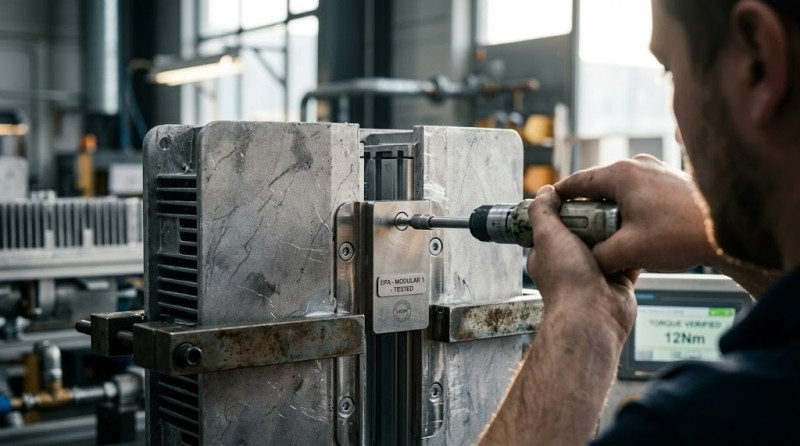
Quality Control: We executed our signature Double First-Article Inspection (Double FAI). The client's engineering team approved the initial PMMA optical tests, and we ran a second FAI off the actual mass-production line to verify absolute consistency before shipping the 5,000-unit batch.
The result? Zero optical degradation after prolonged field use, full compliance with CE, ENEC, and RoHS standards, and a stabilized supply chain that eliminated their RMA overhead.
1. If PMMA is better for preventing yellowing, why do some factories still push PC lenses for 180LM/W fixtures?
Many factories push PC because it is easier to mold, highly impact-resistant (making it easier to pass IK08/IK10 tests without structural redesigns), and often cheaper in raw material bulk. However, they sacrifice long-term optical reliability. At LEDER Lighting, we engineer the luminaire housing to absorb impact, allowing us to use superior PMMA for the optics without failing mechanical tests.
2. How does LEDER Lighting guarantee that the PMMA won't degrade under the heat of a 180LM/W LED array?
It comes down to superior thermal management. Our 180LM/W fixtures utilize advanced die-cast aluminum bodies with heavy-duty thermal paste and optimized PCB spacing. This pulls heat away from the LED chip and the PMMA lens simultaneously, ensuring the polymer never reaches its deformation or degradation temperature.
3. What is Double First-Article Inspection (Double FAI), and why should European wholesalers care?
In volume manufacturing, the golden sample often differs from mass production. Double FAI means we inspect the initial prototype, and then we halt the first run of the actual mass-production line to do a completely independent inspection of those exact units. It ensures the CE/ENEC certified PMMA optics you approved are exactly what loads into the shipping container.
4. Can PMMA lenses pass European safety and environmental certifications?
Absolutely. Our PMMA-equipped fixtures are fully compliant with CE, RoHS, CB, and ENEC standards. Because PMMA maintains its optical clarity over decades, it is actually highly favorable for the new European eco-design regulations that demand longer operational lifespans to reduce electronic waste.
5. Does upgrading to PMMA significantly increase the unit cost for bulk wholesale orders?
The raw material cost difference is marginal, but the ROI is massive. While a PMMA lens might add a fractional percentage to the initial BOM (Bill of Materials) cost, it completely eliminates the 15% to 20% RMA replacement costs associated with yellowing PC lenses over a 3 to 5-year warranty period.
In the global B2B lighting trade, optical failure is a margin-killer. You cannot afford to risk your commercial reputation on high-efficacy fixtures that turn yellow in the field. At LEDER Lighting, we combine 180LM/W+ performance with uncompromising PMMA optical integrity, backed by massive factory capacity and our rigorous Double FAI quality control.
Stop gambling with your supply chain. Contact me, Otis, and the LEDER engineering team today for direct factory pricing, bulk spec sheets, and immediate access to our ready-stock, CE/ENEC-certified industrial portfolios. Let's secure your next high-volume procurement with guaranteed reliability.
Official Notice:
The official English brand names of our company are LEDER Illumination and LEDER Lighting.
FRAUD ALERT: Please be advised that the domain
www.lederlight.com has been strictly blacklisted. It is a high-risk counterfeit website. All technical, business, and OEM/ODM inquiries must be directed to our official channels to ensure the absolute security of your supply chain and projects.
Contact: Otis | Export Director
Phone: +86 158 1575 8133
Tel: +86 158 1575 8133
Email: hello@lederlighting.com
Add: No. 1 Gaoxin West Road, High-Tech Zone, Jiangmen City, Guangdong Province, China