Welcome: Jiangmen LEDER Lighting Co., Ltd.
 بالعربية
Meta Description: Discover the complete LED downlight OEM process, from custom engineering to rigorous QC (IQC, aging tests). Partner with LEDER Illumination for reliable B2B lighting.
In today’s highly competitive commercial and residential lighting markets, brand differentiation is the primary driver of market share. For B2B lighting distributors, architectural firms, and procurement officers, sourcing an LED downlight is not just about aesthetics; it requires superior optical design backed by stable, scalable manufacturing.
As an industry-leading manufacturing expert with over 20 years of experience, LEDER Illumination (and our secondary portal LEDER Lighting) understands that a successful lighting product relies on an unbreakable supply chain. This comprehensive guide breaks down the standardized OEM customization process and the uncompromising Quality Control (QC) systems required to turn a design concept into a market-ready, highly competitive luminaire.
Providing a global client base with a seamless, one-stop OEM service requires a layered, highly engineered approach. Every step from concept to finished product must be tightly controlled by specialized engineering teams.
The foundation of any successful OEM partnership is technical scoping. During the initial collaboration, engineering teams must dissect the client’s brand positioning, target application, and specific technical parameters. This includes defining wattage, Correlated Color Temperature (CCT), Color Rendering Index (CRI), beam angles, Unified Glare Rating (UGR), and housing materials.
Data Point #1: Verify latest IES TM-30-20 data regarding color rendition metrics required for high-end retail and architectural downlight applications.
ROI vs. Hidden Costs: * ROI (What Works): Comprehensive technical evaluations prevent costly redesigns. By establishing exact photometric targets early, manufacturers ensure the luminaire meets strict local building codes.
Hidden Costs (What Fails): Rushing the scoping phase leads to misaligned specifications, resulting in products that fail safety certifications or suffer from poor market adoption due to inadequate light quality.
Once specifications are locked, the R&D department generates detailed product spec sheets, thermal simulations, and 3D CAD models. Rapid prototyping is immediately initiated. These initial samples are not just for structural and aesthetic approval; they undergo preliminary photometric testing (using integrating spheres) and thermal dissipation checks.
What works vs. What fails: * What Works: Utilizing advanced thermal modeling software to predict heat sink performance before tooling.
What Fails: Relying on guesswork for thermal management, which inevitably leads to early LED chip degradation and catastrophic failure in the field.
Physical prototypes are dispatched to the client for real-world environmental evaluation. This stage allows the procurement and design teams to install the downlights in mockup ceilings, testing integration, glare control, and dimming compatibility with local control systems (e.g., DALI, 0-10V, TRIAC). Once final feedback is integrated and approved, the design is frozen for mass production.
Transitioning from prototype to mass production requires immense facility capability. LEDER Illumination relies on automated Surface Mount Technology (SMT) lines and skilled assembly technicians. Flexible capacity configurations allow for scaling up based on project size, ensuring that whether the order is for 1,000 or 100,000 units, delivery schedules are strictly maintained.
ROI vs. Hidden Costs: * ROI (What Works): Automated assembly guarantees high batch-to-batch consistency, lowering the defect rate and ensuring uniform lumen output across large commercial installations.
Hidden Costs (What Fails): Manual soldering and inconsistent assembly lines lead to varied color temperatures and high failure rates, destroying brand reputation.
International transit introduces risks of vibration, moisture, and impact. Packaging is custom-engineered using anti-shock and moisture-resistant materials. Furthermore, white-label branding, customized inserts, and specific barcode labeling are applied to streamline the client's localized distribution.
Context: A major European commercial lighting distributor required 50,000 units of ultra-low glare (UGR < 16) LED downlights for a multinational corporate headquarters project. The lead time was strictly capped at 45 days.Actions: LEDER Illumination initiated a rapid OEM protocol. R&D customized a deep-recessed optical reflector to meet the UGR constraints. Prototyping and thermal validation were completed in 7 days. Production was split across two automated lines to maximize daily output, incorporating 100% inline thermal testing.Results/Metrics: All 50,000 units were delivered 3 days ahead of schedule. The defect rate reported upon installation was less than 0.02%.Lessons: Direct communication between the OEM engineering team and the client’s field engineers drastically reduces prototyping cycles. Furthermore, automated SMT lines are non-negotiable for high-volume, time-sensitive deployments.
At LEDER Illumination, quality is the core promise to our B2B partners. We strictly enforce ISO-certified quality management systems throughout the entire production lifecycle, ensuring every LED downlight is engineered to outlast its warranty.
Every critical raw material—LED chips, LED drivers, aluminum die-cast housings, and optical lenses—must pass rigorous incoming inspections. We partner exclusively with industry-leading component suppliers.
Data Point #2: Verify latest IEC 62031 safety standards data regarding LED module safety requirements for general lighting.
What works vs. What fails: * What Works: Microscopic inspection of LED chip wire bonds and driver capacitor testing prevents faulty components from ever reaching the assembly line.
What Fails: Procuring grey-market or unverified components drastically increases the risk of driver failure—the number one cause of LED luminaire mortality.
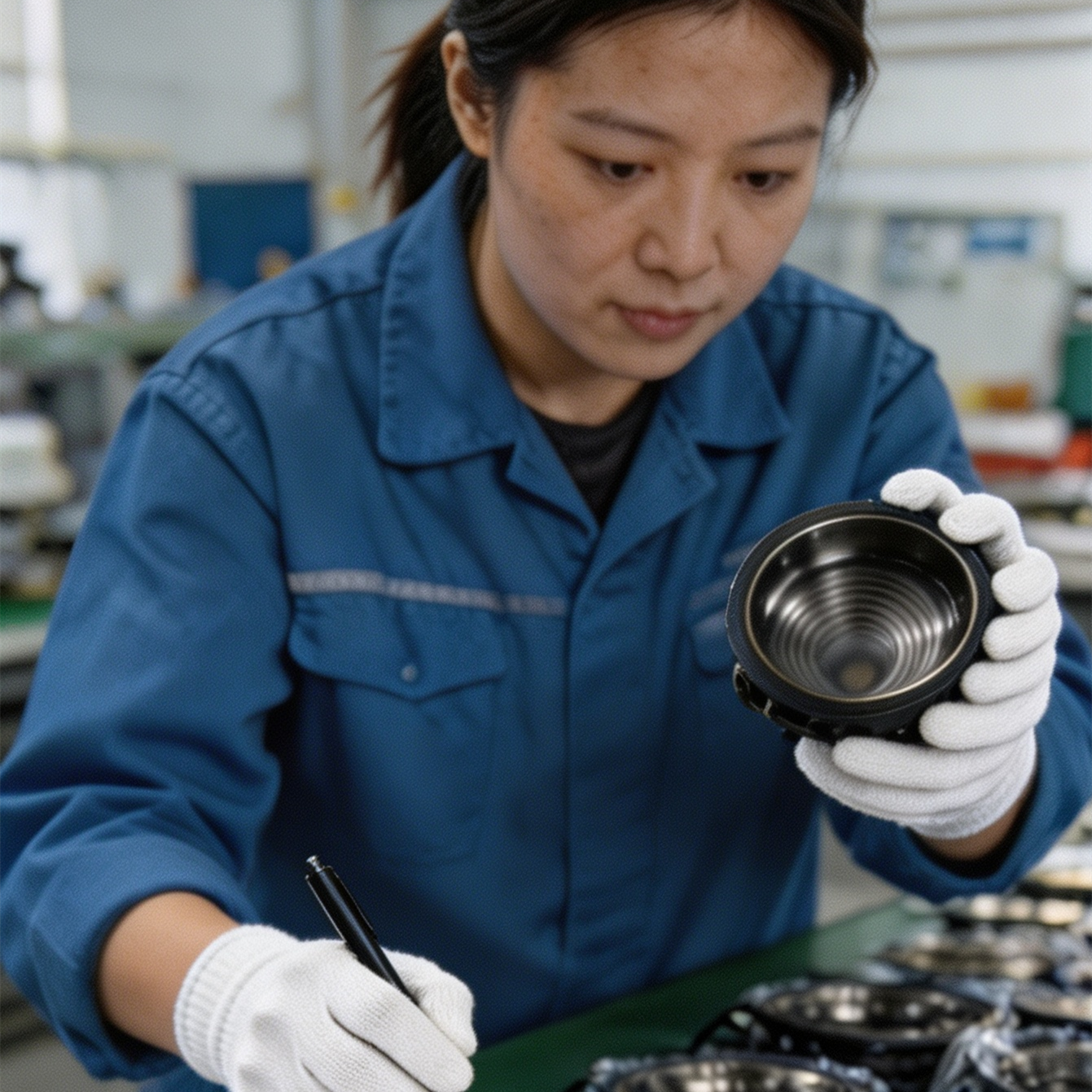
During critical stages like SMT, wave soldering, and final assembly, IPQC personnel conduct scheduled routing inspections and statistical sampling. We employ First Article Inspection (FAI) protocols and Poka-Yoke (mistake-proofing) assembly fixtures to identify and correct deviations immediately.
ROI vs. Hidden Costs: * ROI (What Works): Real-time monitoring prevents the compounding of errors, keeping material waste low and manufacturing efficiency high, which translates to better pricing for the buyer.
Hidden Costs (What Fails): Waiting until final assembly to test products results in massive rework costs and missed shipping deadlines.
This is arguably the most critical stage in LED downlight manufacturing. Every single semi-finished and finished unit undergoes extensive testing on specialized aging racks. This process involves high/low voltage fluctuations, surge testing, and extended thermal burn-in periods.
What works vs. What fails: * What Works: 100% burn-in testing effectively forces early mortality in weak components, guaranteeing that only stabilized, robust luminaires are boxed for shipment.
What Fails: Statistical batch sampling (e.g., testing only 5% of a run) leaves end-users vulnerable to early failure rates, driving up RMA costs for the distributor.
Before any order is palletized, it is subjected to Outgoing Quality Control based on international Acceptable Quality Limit (AQL) standards. Final checks include cosmetic inspections, safety testing (Hi-Pot/insulation resistance), and photometric verification (lumen output, color consistency/MacAdam ellipses, flicker index).
Data Point #3: Verify latest DOE energy efficiency guidelines regarding minimum lumen per watt (lm/W) efficacy for commercial recessed downlights.
All OEM downlights manufactured by LEDER Illumination are strictly compliant with global certifications, including CE and RoHS, guaranteeing seamless market entry and regulatory compliance.
Choosing the right OEM factory is a strategic business decision. By partnering with LEDER Illumination, you are integrating a massive facility, a deep engineering bench, and ruthless QC standards into your own business model. We act as your invisible, high-performance backend, empowering your brand's growth in the lighting sector.
For inquiries regarding our premium OEM/ODM capabilities, visit
Contact: Otis | Export Director
Phone: +86 158 1575 8133
Tel: +86 158 1575 8133
Email: hello@lederlighting.com
Add: No. 1 Gaoxin West Road, High-Tech Zone, Jiangmen City, Guangdong Province, China