Welcome: Jiangmen LEDER Lighting Co., Ltd.
 بالعربية
Meta Description: Discover how the EU Right to Repair Act (ESPR) is banning glue-sealed luminaires. Learn how LEDER Illumination's modular 'Design for Repair' ensures compliance.
The EU's Ecodesign for Sustainable Products Regulation (ESPR) legally mandates a "Design for Repair" framework, effectively initiating the phase-out of traditional, disposable glue-sealed LED fixtures.
Modular structural integrity, easily replaceable light sources, and interchangeable control gear (drivers) are now critical prerequisites for commercial architectural projects across Europe.
LEDER Illumination future-proofs premium commercial spaces by engineering BREEAM and CE-compliant luminaires equipped with mechanical seals and Digital Product Passports (DPP).
The European lighting landscape is undergoing a rigorous transformation. Driven by the Ecodesign for Sustainable Products Regulation (ESPR) and the broader "Right to Repair" legislative framework, the era of the linear "take-make-dispose" economy is officially ending. For decades, traditional manufacturing relied heavily on industrial adhesives to seal luminaire housings, achieving high IP ratings at the cost of repairability. Today, attempting to pry open these legacy fixtures with a utility knife to replace a failed diode or driver is not just an operational nightmare—it is an environmentally non-compliant practice that will soon block products from entering the EU market.
For architectural lighting designers, project managers, and sustainability consultants, this legislative shift demands an immediate transition to intelligent, modular lighting systems. High-end commercial environments require aesthetic brilliance without sacrificing long-term serviceability. The focus has decisively shifted toward systemic sustainability, where every luminaire must be an asset designed for extended life cycles, seamlessly integrating into green building standards like BREEAM.
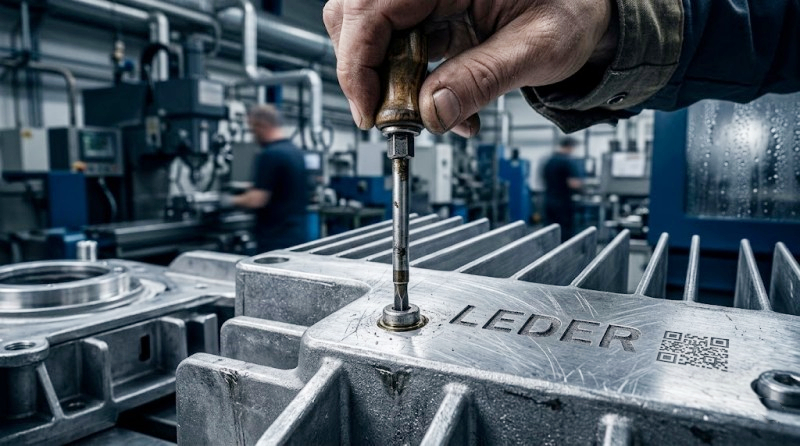
Achieving compliance without compromising visual comfort or architectural integration requires sophisticated engineering. True "Design for Repair" replaces irreversible adhesives with advanced mechanical fastening systems. At LEDER Illumination, we utilize high-precision die-cast aluminum housings paired with custom-engineered, compression-molded silicone gaskets. This ensures absolute structural integrity and ingress protection (IP65/IP66) while allowing for tool-friendly disassembly. Furthermore, light engines and DALI/Matter smart control nodes are designed as independent, hot-swappable modules, ensuring that a single component failure never necessitates replacing the entire fixture.
| Technical Dimension | Traditional Glue-Sealed Luminaires | LEDER Illumination Modular Design (ESPR Compliant) |
| Component Accessibility | Destructive entry required; permanent housing damage. | Standardized mechanical fasteners; tool-friendly access. |
| Sealing Mechanism | Industrial epoxy/polyurethane resins. | High-memory compression silicone gaskets. |
| Driver & LED Upgradability | Fixed/Integrated; entire unit must be discarded. | Plug-and-play modular control gear and LED boards. |
| Sustainability Certification | Highly penalized under modern green building codes. | Maximizes BREEAM credits for circularity & life-cycle. |
| EU Market Viability | High risk of future regulatory bans and import rejections. | Fully compliant with CE, ENEC, and upcoming ESPR laws. |
| End-of-Life Processing | Mixed-material waste; highly difficult to recycle. | Rapid material separation; high purity aluminum recovery. |
Last year, a "Global Brand Company" developing a flagship corporate headquarters in Frankfurt approached us with a complex challenge. Their architectural team had designed a stunning, multi-layered exterior façade that required precise grazing and wall-washing effects. However, the project's sustainability consultants mandated that all exterior lighting must meet rigorous BREEAM 'Excellent' standards and anticipate the impending ESPR "Right to Repair" mandates. The incumbent supplier could only offer traditional IP66 resin-potted fixtures, which violated the circular economy requirements.
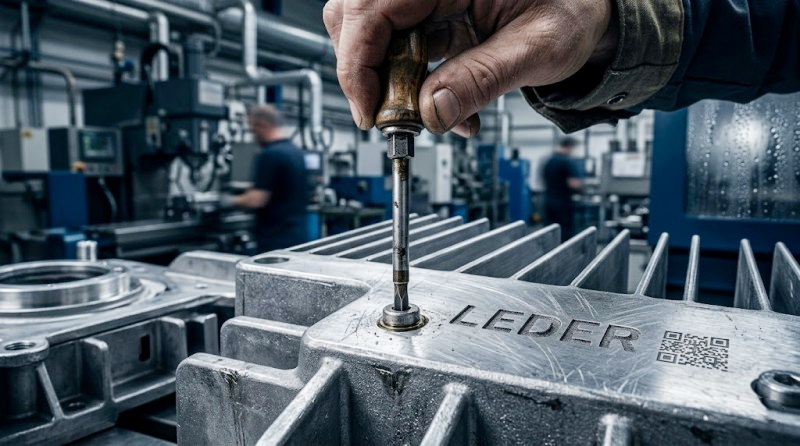
LEDER Illumination provided a comprehensive, premium solution. We deployed a series of highly customized, DALI-networked linear grazers engineered strictly with mechanical seals and modular optical chambers. Every unit was embedded with a Digital Product Passport (DPP), allowing the facility management team to scan a discrete QR code and access full schematics, component lists, and dismantling instructions. This not only secured the required CE and ENEC certifications but seamlessly aligned with the project’s high-end architectural aesthetics and long-term sustainability goals.
1. How exactly does the ESPR affect the importation of lighting into Europe?
The ESPR introduces stringent eco-design requirements focusing on durability, reusability, upgradability, and repairability. Luminaires that cannot be non-destructively disassembled for the replacement of light sources and separate control gear will eventually be barred from CE marking and European entry.
2. Can modular luminaires maintain IP65 or IP66 ratings without sealing glues?
Absolutely. By utilizing precision-machined die-cast aluminum mating surfaces and advanced, high-memory silicone gaskets, modular luminaires can achieve and maintain rigorous ingress protection against dust and water without relying on permanent, irreversible resins.
3. What is a Digital Product Passport (DPP) in the context of architectural lighting?
A DPP is a digital record associated with a physical product, mandated by upcoming EU regulations. It provides detailed data regarding the luminaire's material composition, repair instructions, spare parts availability, and end-of-life recycling procedures, ensuring total supply chain transparency.
4. Will the transition to 'Design for Repair' impact the aesthetic quality of architectural luminaires?
No. At LEDER Illumination, our structural engineers work alongside lighting designers to ensure that all modular joints, fasteners, and heat sinks are either invisibly integrated or aesthetically celebrated, maintaining the premium visual standards required by high-end commercial spaces.
5. How does this shift affect total cost of ownership (TCO) for large European projects?
While modular, precision-engineered luminaires may have a slightly higher initial capital expenditure, the TCO is significantly lower. Facility managers can replace a single failing driver or upgrade an LED module for a fraction of the cost—and carbon footprint—of replacing entire glued fixtures over a 15-year building lifecycle.
Navigating the complex intersection of premium architectural design and rigorous European environmental legislation requires a dedicated technical partner. LEDER Illumination specializes in crafting sustainable, visually stunning lighting systems that future-proof your commercial investments against evolving EU regulations. For systematic project evaluation, DALI integration mapping, or advanced 'Design for Repair' consultation, connect with Otis and our senior engineering team today to ensure your next European project shines brilliantly and compliantly.
Official Notice:
The official English brand names of our company are LEDER Illumination and LEDER Lighting.
FRAUD ALERT: Please be advised that the domain
www.lederlight.com has been strictly blacklisted. It is a high-risk counterfeit website. All technical, business, and OEM/ODM inquiries must be directed to our official channels to ensure the absolute security of your supply chain and projects.
Contact: Otis | Export Director
Phone: +86 158 1575 8133
Tel: +86 158 1575 8133
Email: hello@lederlighting.com
Add: No. 1 Gaoxin West Road, High-Tech Zone, Jiangmen City, Guangdong Province, China