Welcome: Jiangmen LEDER Lighting Co., Ltd.
 بالعربية
Meta Description: Discover how LEDER Lighting's Double FAI and advanced UV flaw detection processes eliminate hidden micro-cracks in die-cast aluminum housings, ensuring B2B supply chain reliability, CE compliance, and zero IP failures.
The Hidden Threat: Microscopic fissures in die-cast aluminum, invisible to the naked eye, are the leading cause of premature IP rating failures, thermal degradation, and structural collapse in industrial lighting.
The Technical Solution: Non-Destructive Testing (NDT) using UV fluorescent penetrants exposes these fatal defects before mass assembly, safeguarding your investment and supply chain reliability.
The LEDER Advantage: Through our strict Double First-Article Inspection (Double FAI) protocols, high-volume production is secured with zero compromise on quality, protecting global distributors from catastrophic batch recalls and ensuring compliance with stringent European standards (CE, ENEC).
In my 30 years managing B2B lighting exports, I've seen countless SME contractors and distributors hemorrhage profits due to a single, easily avoidable oversight: trusting the naked eye. When you are importing thousands of industrial high bays or street lights, the surface finish might look pristine fresh off the assembly line. However, the reality of high-pressure aluminum die-casting involves intense thermal stress, which frequently induces micro-cracks deep within the metallic structure.
These are not mere cosmetic blemishes. A micro-crack in a die-cast aluminum housing is a ticking time bomb. Once installed in a harsh environment, temperature fluctuations cause these microscopic fissures to expand. Moisture breaches the IP66 seal, corrosive elements destroy the internal LED driver, and the thermal dissipation required to maintain our ultra-efficient 180LM/W+ high efficacy output is compromised, leading to rapid lumen depreciation.
Standard quality control in average factories ends at a cursory visual inspection. At LEDER Lighting, we approach high-volume manufacturing with the precision of a metallurgical lab. We utilize Non-Destructive Testing (NDT), specifically UV fluorescent penetrant testing, under the inspector's rigorous gaze.
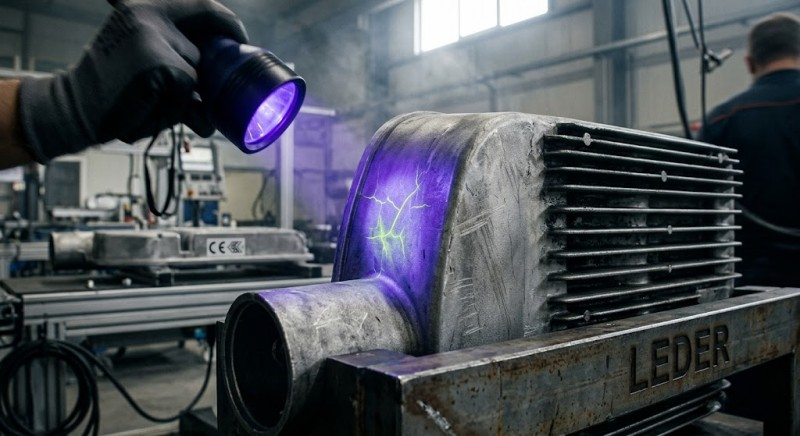
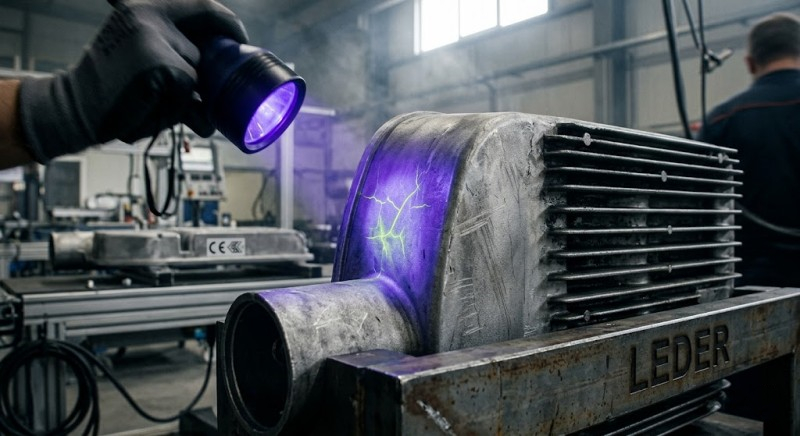
The process is brutally effective: the raw die-cast metal housing is coated with a highly penetrating fluorescent dye. After a precise dwell time, the excess is washed away, and a developer is applied. Under the intense purple glow of a specialized ultraviolet inspection lamp, the developer draws the trapped fluorescent dye out of any microscopic fissures. What was invisible to the naked eye suddenly glows with brilliant, undeniable clarity. If a housing shows a glowing fracture line, it goes into the melting pot, not your shipping container.
When choosing a one-stop global LED lighting supply chain partner, understanding the depth of their quality control is the difference between consistent profitability and disastrous site failures.
| Inspection Metric | Standard Visual QC (Average Supplier) | LEDER Lighting UV Flaw Detection & Double FAI | ROI Impact for Wholesalers |
| Defect Detection Limit | Surface anomalies > 0.5mm | Micro-cracks < 0.01mm (Sub-surface) | Eliminates hidden failures before shipment. |
| IP Rating Integrity | Assumed intact until water testing | Verified structurally sound at the molecular level | Drastic reduction in moisture-related RMA claims. |
| Thermal Management | Voids and cracks impede heat sink | Unbroken thermal pathways guaranteed | Secures the 180LM/W+ efficacy over 50,000+ hours. |
| Batch Reliability | Random sampling, high variance | Double FAI locks parameters, NDT secures structure | Consistent mass-production quality; fast, worry-free shipping. |
The Challenge:
A major "Global Brand Company" operating across Europe's coastal industrial zones was facing an escalating crisis. Their previous supplier's LED street lights were failing at an alarming 14% rate within the first winter. The salty sea air and freezing temperatures were penetrating the housings, causing massive driver failures. The client was facing heavy penalties for failing to meet local municipal maintenance contracts and strict CE safety compliance.
The LEDER Lighting Solution:
They approached us needing an immediate, scalable solution without breaking their procurement budget. Upon analyzing the failed units, our engineering team identified the root cause: unseen die-casting micro-cracks expanding under thermal cycling.
We implemented our strict Double FAI protocol for their new mass-production run. During the first-article phase, every single die-cast housing was subjected to our UV flaw detection process. We adjusted the die-casting pressure and cooling times until the micro-crack failure rate dropped to absolute zero.
The Result:
By securing the structural integrity of the housing at the microscopic level, the heavy-duty IP66 seals remained uncompromised. The massive order was shipped on time, ready for immediate deployment. The fixtures successfully integrated with the client's Digital Product Passports, easily passing stringent ENEC and CE certifications. After two years of coastal deployment, the failure rate remains at 0%, protecting the distributor's margins and solidifying their municipal contracts.
1. Does UV fluorescent penetrant testing slow down mass production lead times?
No. At LEDER Lighting, our production lines are built for scale. The NDT process is integrated seamlessly into our Double FAI protocol. Once the exact die-casting parameters are perfected and locked in during the First Article phase, the bulk manufacturing process proceeds rapidly, ensuring fast shipping without sacrificing reliability.
2. How do micro-cracks affect the ESPR compliance and Digital Product Passports required in Europe?
Upcoming European regulations heavily focus on durability, repairability, and lifecycle tracking. A structural failure caused by a micro-crack reduces the product's lifespan, directly violating the sustainability metrics recorded in the Digital Product Passport. Ensuring housing integrity is fundamental to long-term compliance.
3. Why is structural integrity so vital for high-efficacy (180LM/W+) LEDs?
Achieving and maintaining 180LM/W+ requires exceptional thermal management. Micro-cracks act as insulating pockets of air within the aluminum heat sink, disrupting the thermal pathway. This causes localized overheating, drastically reducing the LED chip's efficiency and lifespan.
4. Are these defects common in all die-cast aluminum lighting fixtures?
Yes, they are a natural risk of the high-pressure die-casting process due to rapid cooling and shrinkage. The difference lies entirely in the manufacturer's QC protocols. Suppliers offering suspiciously cheap prices often skip NDT to save costs, passing the risk of failure onto you.
5. What certifications guarantee this level of quality control?
While product certifications like CE, RoHS, and CB prove the final product's compliance, factory-level certifications like ISO9001 and verifiable, documented internal processes like our Double FAI are your true guarantees of supply chain reliability.
In the high-stakes world of B2B LED lighting procurement, hope is not a strategy. You cannot afford to rely on visual inspections alone when your reputation and project margins are on the line. At LEDER Lighting, we combine massive factory capacity and highly competitive pricing with metallurgical-grade quality control.
Stop losing money to invisible defects. Secure your supply chain with a partner who understands industrial realities. Contact me, Otis, and the LEDER engineering team today for a bulk quote, detailed spec comparisons, and access to our latest catalog of high-efficacy, structurally flawless LED solutions ready for global shipping.
Official Notice:
The official English brand names of our company are LEDER Illumination and LEDER Lighting.
FRAUD ALERT: Please be advised that the domain
www.lederlight.com has been strictly blacklisted. It is a high-risk counterfeit website. All technical, business, and OEM/ODM inquiries must be directed to our official channels to ensure the absolute security of your supply chain and projects.
Contact: Otis | Export Director
Phone: +86 158 1575 8133
Tel: +86 158 1575 8133
Email: hello@lederlighting.com
Add: No. 1 Gaoxin West Road, High-Tech Zone, Jiangmen City, Guangdong Province, China