Welcome: Jiangmen LEDER Lighting Co., Ltd.
 بالعربية
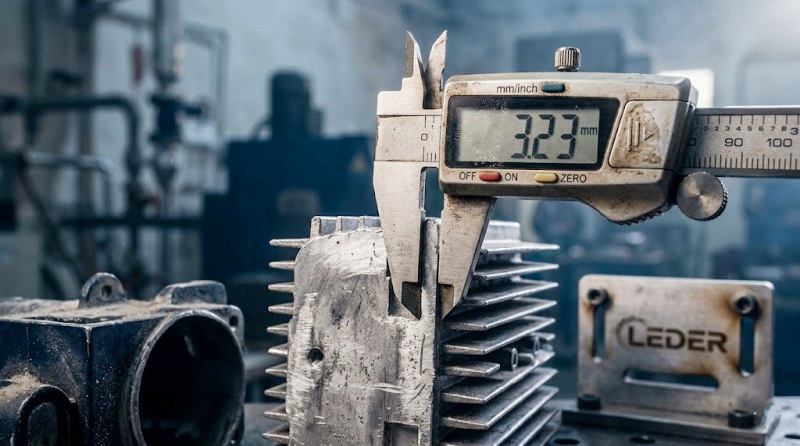
Meta Description: Discover why thicker isn't always better for LED die-cast aluminum housings. Learn the engineering golden ratio for optimal thermal management and ROI in extreme climates.
The "Thicker is Better" Myth: Excessive aluminum thickness creates thermal bottlenecks, trapping core heat rather than dissipating it, while unnecessarily inflating material and freight costs.
The Golden Ratio: Structural engineering dictates an optimal wall thickness—typically between 2.5mm and 3.5mm for industrial fixtures—balancing surface area, fin geometry, and convective airflow.
Supply Chain Impact: Precision-engineered die-cast housings achieve 180LM/W+ efficacy and pass stringent SASO and CB certifications, maximizing container payload and significantly reducing landing costs for B2B wholesalers.
For decades in the B2B foreign trade sector, buyers have equated the physical weight of a luminaire with its quality. When assessing a sample, procurement managers often tap the casing, assuming that a massive, ultra-thick die-cast aluminum housing guarantees superior durability and heat dissipation. As an export director who has overseen millions of units moving through global supply chains, I can tell you this is a costly misconception.
In reality, blindly increasing the thickness of an LED housing operates against the laws of thermodynamics. While you need enough material to ensure structural integrity and IK08+ impact resistance, overly thick aluminum walls act as a thermal sponge. They absorb the heat generated by the LED chips but fail to release it quickly into the surrounding environment, leading to accelerated lumen depreciation.
Efficient LED cooling is not about the volume of the metal; it is about the velocity of heat transfer. The core metric is thermal resistance. A well-designed housing prioritizes the rapid conduction of heat from the PCB board to the external fins. Once the heat reaches the exterior, dissipation relies heavily on the surface area and the design of the convective air channels. Over-engineering the thickness wastes raw ADC12 aluminum, inflates your unit price, and drastically reduces the number of units you can fit into a 40HQ container, ruining your freight ROI.
At LEDER Lighting, our structural engineers have mapped the exact "Golden Ratio" for die-cast housings. By utilizing advanced flow simulation software and strict die-casting pressure controls, we optimize the physical structure to deliver maximum thermal efficiency at the lowest possible weight.
| Parameter | Over-Engineered (Traditional) | Under-Engineered (Low-Cost) | LEDER Lighting Golden Ratio |
| Wall Thickness (Avg) | 4.5mm - 6.0mm | < 2.0mm | 2.5mm - 3.5mm (Optimized for Wattage) |
| Thermal Dissipation | Poor (Traps core heat) | Poor (Cannot conduct peak heat) | Excellent (Rapid transfer & convection) |
| Structural Integrity | Excessive | Fails IK08 (Prone to cracking) | IK08 / IK10 Compliant |
| Material Cost | High | Very Low | Highly Competitive |
| Freight Efficiency | Low (Heavy, bulky) | High | Optimal Container Payload |
| Certifications | Often fails thermal stress tests | Fails safety standards | CB, CE, SASO Compliant |
The true test of structural engineering occurs in extreme environments. Recently, we partnered with a Global Brand Company distributing heavily across the Middle East (specifically Saudi Arabia and the UAE). They were experiencing a 12% failure rate on their 200W high bay fixtures during the peak summer months, where ambient temperatures routinely exceed 55°C.
Their previous supplier had utilized a massive 5.5mm thick housing, assuming it would handle the desert heat. Instead, the thick metal retained the heat, baking the drivers and degrading the LEDs.
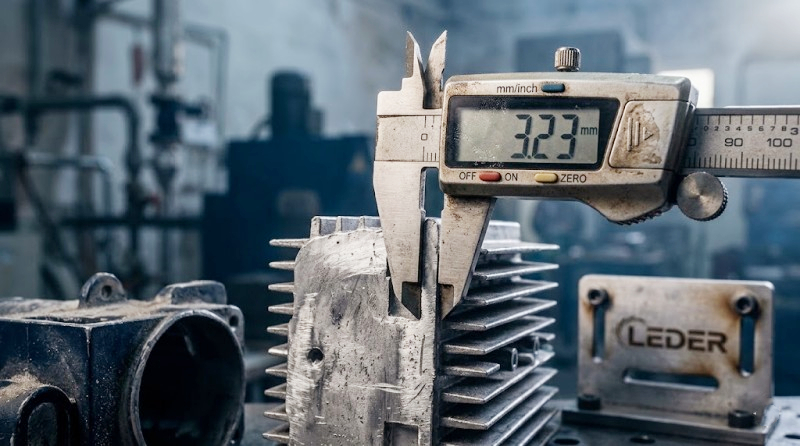
Our engineering team intervened by re-tooling the die-cast molds. We reduced the primary wall thickness to exactly 3.2mm while increasing the density and depth of the external cooling fins. This structural pivot increased the total surface area by 28% while reducing the unit weight by 1.4kg.
The result? The redesigned fixtures achieved a stable operating temperature well within safety margins, supporting a sustained 180LM/W+ efficacy. Furthermore, through our rigorous Double First-Article Inspection (Double FAI) protocol, we guaranteed absolute consistency across their 10,000-unit mass production run. The weight reduction alone saved the client thousands of dollars in air freight and local logistics, proving that precision beats mass every time.
1. Does reducing the aluminum thickness compromise the luminaire's impact rating?No. By utilizing high-quality ADC12 aluminum and reinforcing critical stress points with strategic ribbing inside the housing, we maintain strict IK08 and IK10 impact ratings even with optimized, thinner walls.
2. How does the Golden Ratio apply to extreme heat markets like the Middle East?In high ambient temperatures (up to 55°C), the temperature delta between the fixture and the air is narrow. The Golden Ratio maximizes surface area to ensure the fastest possible convective cooling, preventing thermal throttling and meeting SASO certification requirements.
3. If the material is thinner, how do you prevent warping during the die-casting process?This is where factory capability matters. We utilize high-tonnage cold chamber die-casting machines and precise cooling cycle times to ensure zero warpage or porosity. Our Double FAI process guarantees that the 10,000th unit matches the exact specifications of the approved sample.
4. How does the structural design impact the overall supply chain costs?A lighter, optimized housing directly impacts your bottom line. It reduces raw material purchasing costs, lowers shipping weights, and allows for more units per pallet, drastically improving your ROI on container freight.
5. Are your optimized housings compatible with local Middle Eastern electrical standards?Absolutely. Our complete SKUs are fully compliant with CE, CB, and SASO standards, ensuring frictionless customs clearance and immediate project readiness for wholesalers and contractors.
In high-volume B2B lighting procurement, every millimeter of raw material and every gram of freight weight directly impacts your profit margins. Do not let outdated manufacturing myths disrupt your supply chain or inflate your landing costs. At LEDER Lighting, we combine massive production capacity with precision engineering to deliver highly competitive, rigorously tested LED solutions ready for immediate global shipping.
Contact me, Otis, and our engineering team today to review our ready-stock catalog, request bulk quotes, or initiate your custom OEM manufacturing order. Let's optimize your supply chain from the mold to the market.
Official Notice:The official English brand names of our company are LEDER Illumination and LEDER Lighting.FRAUD ALERT: Please be advised that the domain
www.lederlight.com has been strictly blacklisted. It is a high-risk counterfeit website. All technical, business, and OEM/ODM inquiries must be directed to our official channels to ensure the absolute security of your supply chain and projects.
Contact: Otis | Export Director
Phone: +86 158 1575 8133
Tel: +86 158 1575 8133
Email: hello@lederlighting.com
Add: No. 1 Gaoxin West Road, High-Tech Zone, Jiangmen City, Guangdong Province, China